If you’re like most people… you’ve noticed…
Your power bill is up.
And not just by a little.
The price of gasoline is rising fast…
While a wave of chaos and volatility has hit the financial markets.
What’s happening today is anything but normal.
It’s not just runaway inflation… or war…
Nor is it an ordinary market crash.
In this episode, we’re going to uncover exactly what’s going on…
Something no government or power company will likely admit…
Our guest today says, we are headed for a new kind of “lockdown.” One that makes the supply chain mess and soaring inflation of COVID seem tame in comparison.
And it all ties back to the critical building blocks of our modern world…
Late last year, a power grid that serves 65 million Americans — stretching from the Midwest to New Jersey — failed its reliability auction for the first time in history.
Meaning: there was not enough electricity being generated to keep the lights on.
Not because of a storm. Or cyberattack.
As we speak…
Capacity prices on that grid have exploded, tenfold.
Meanwhile, in Ohio — 130 data centers are siphoning energy off the grid. And residential electricity rates have ripped 60% higher. All in just five years.
And in northern Virginia — where we find the densest concentration of data centers on earth — rates are up 20 to 30%.
Why is this happening?
And what could it mean for your life, money and investments?
I promise you, we’re going to get to the bottom of this story today…
You’ve probably sensed it…
Something strange is happening… unlike anything we’ve seen before.
All around the world, governments are beginning to lock down the most critical materials on earth…
It’s started with electricity…
In Thailand, the government has banned fuel exports and begun rationing at the pump. Civil servants have been ordered to take the stairs instead of the elevator.
The Philippines has moved government agencies to a four-day work week, just to cut energy consumption.
China…the world's largest producer of rare earth minerals… has placed 12 critical materials under export controls…
And the United Kingdom — the world's fifth-largest economy — is sitting on just two days of natural gas in reserve.
Now you might wonder… why does this matter to America?
We’ll get to that.
Perhaps most telling is the response of several major U.S. tech companies.
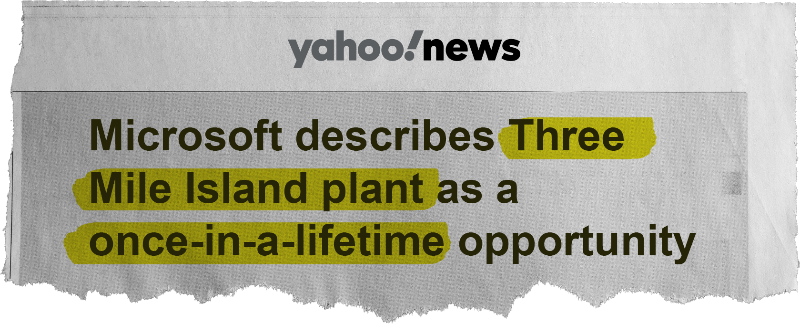
Microsoft just paid $1.6 billion to restart Three Mile Island. Yes — THAT Three Mile Island. The infamous nuclear reactor. Just to run its AI.
And they’re not alone…
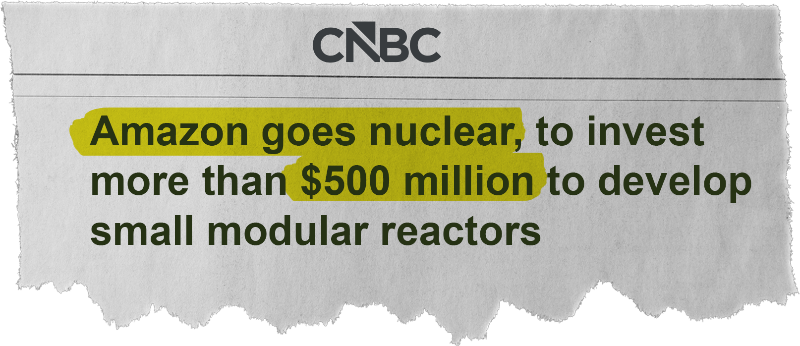
Amazon has locked in 2 gigawatts of nuclear power and dropped half a billion dollars on small modular reactors.
They are now building private power plants. Private grids. Private infrastructure. Separate from the system we all depend on.
And they don’t have a choice!
The AI arms race is consuming just about every chip, every ounce of copper, every gram of silver, every rare earth mineral on the planet. For millions of Americans… it’s driving their electricity bill through the roof.
But what’s coming next could be a shock to the economy unlike any we’ve seen in 50-plus years.
The last time we saw anything remotely like it?
Americans had to wake up before dawn and wait in line – simply to fill up their gas tank.
And a shortage of ONE key commodity – oil – crashed the Dow 45%. Sent inflation to 12%. And forced lights to be dimmed in Times Square.
What’s happening right now is like an amped-up sequel… only this time, it’s not just oil.
We could soon see critical shortages of everything from gas and electricity, to semiconductors, and critical minerals… all at the same time.
The man who is about to walk us through all of it was in Washington the last time this happened.
He spent the next 50 years inside the system working with the CIA, the Pentagon, the U.S. Treasury.
Today, he has come forward to raise an alarm over a new crisis he sees coming.
I hope you’ll pay close attention…
Because if he’s even half right – this could impact just about every facet of our lives… our investments… and our ability to move about freely.
THE MAN WHO SAW IT COMING
To help us unravel this story, we’re joined by Jim Rickards.
Jim, thank you for taking time out of your busy schedule to be with us.
Jim Rickards:
Thank you for having me. I wish it were under better circumstances... but I think what we're going to cover today is something every American investor needs to hear.
Aaron:
Now, for those who don’t know you, Jim... let me take a moment. Because your background is unlike any I've ever seen.
Jim spent 35 years on Wall Street. He started at Citibank. He went on to become General Counsel of Long-Term Capital Management... which, for anyone who remembers the late '90s... was the hedge fund at the center of what nearly became a global financial meltdown in 1998.
And he didn't just work there. He helped orchestrate its $3.6 billion rescue…
And patched together a deal that saved us from an unthinkable collapse.
Jim:
It was the most intense 72 hours of my career. Until now, at least.
Aaron:
After LTCM, he went on to advise the CIA and the Pentagon on matters of global finance and national security.
He's testified before Congress twice... before the House Science Committee and the Senate Banking Committee.
He's written eight books published by Penguin Random House. Several of them hit the New York Times bestseller list.

And here's something that blows my mind…
One week before the 2024 presidential election, Jim... you published a prediction. You told anyone who would listen: Trump will win. And somehow, you forecast the exact Electoral College count: 312 to 226.
Jim:
I’ll take the compliment. But it wasn’t a guess. I spent months modeling early voting patterns and county-level turnout data. The model said 312… and we published it.
Aaron:
And your most recent book is called MoneyGPT. Inside, you warned that artificial intelligence would destabilize the global financial system. That the rush to build AI would create exactly the kind of crisis that’s looming today.
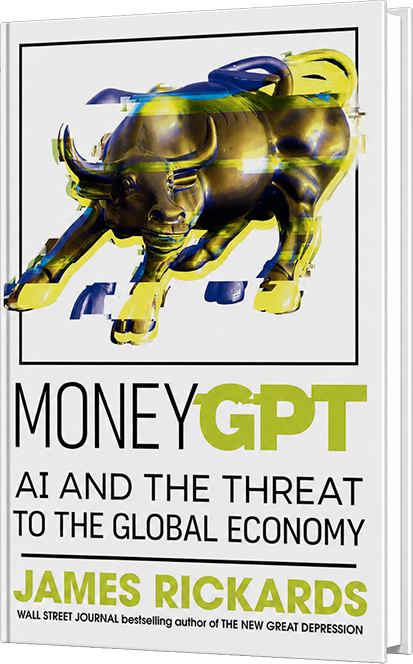
And Jim... everything you warned about is now playing out in real time.
Jim:
Unfortunately, yes. And I wish more people had paid attention. Because I believe what's coming next is going to be far more disruptive than any shortage or crisis we've seen, to date.
Aaron:
Well, that's exactly why we're here today. But Jim... before we get into the details, I want to point out one more connection.
The last time America faced a crisis of this nature – you were front and center.
Jim:
That’s right.
Back in the 1970s... a single commodity nearly brought the economy to its knees.
And I was on the front-lines.
A SHOCK THAT BROUGHT
AMERICA TO ITS KNEES
It was October 1973.
Aaron:
The oil embargo of ‘73?
JIM:
Exactly…
That’s when the Yom Kippur War broke out in the Middle East. Egypt and Syria attacked Israel. President Nixon airlifted weapons to support the Israelis.
And in response... the Arab oil-producing nations did something nobody anticipated: They weaponized their oil supply... and embargoed the United States.
Within weeks, the price of oil shot from $2.90 a barrel... to $11.65. A 300% increase.
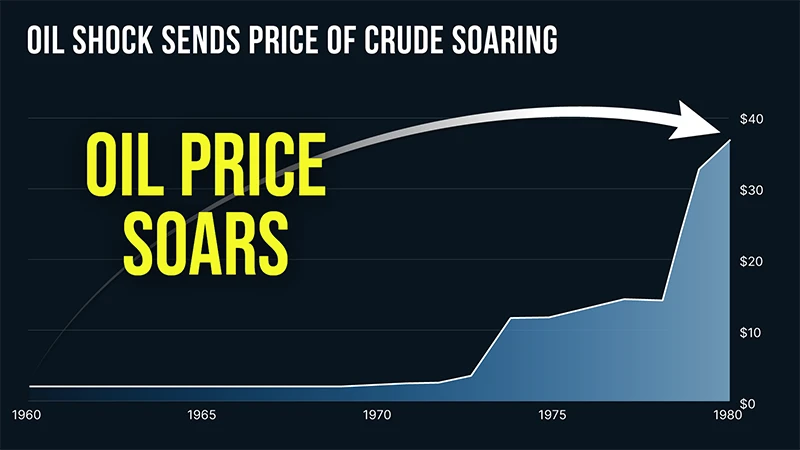
If you’re over age 60, you might remember the five-mile-long gas lines.

People setting their alarms for 3 AM... driving to the station in the dark... just hoping there'd be something left by the time they reached the pump.
At one point it got so bad…
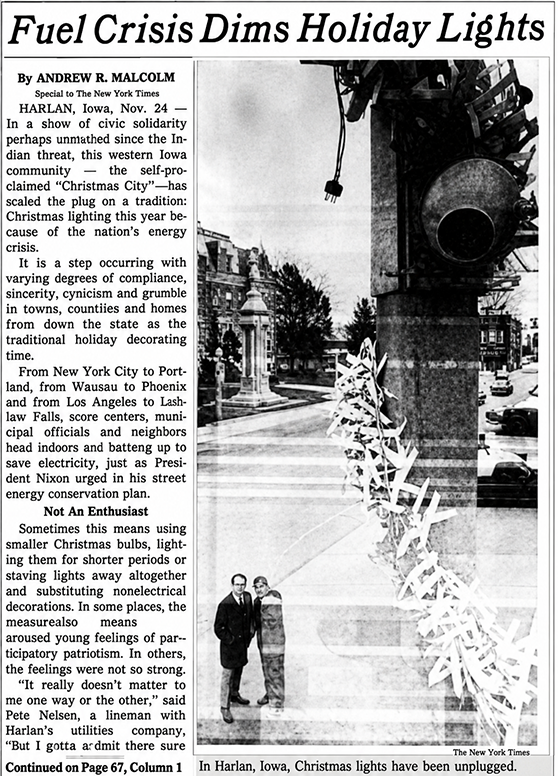
They turned the lights off in Times Square.
Aaron:
And the financial damage?
Jim:
The Dow Jones crashed 45%. The S&P 500 fell 48%. Inflation hit 12%. Unemployment hit 9%. We entered a 16-month recession... the worst since the Great Depression.
Aaron:
Now Jim... you were in Washington during this period.
Jim:
That’s correct.
Back then, I was part of an elite team plotting a secret takeover of Saudi Arabia’s oilfields. It was our plan-B if they didn’t agree to our demands.
Anyway… I bring this up because the same kind of thing is happening today.
Only this time, it’s worse.
Aaron:
Worse? How so?
Jim:
The crisis of 1973 was driven by one commodity. That’s why they called it an “Oil Shock.”
But today? The AI arms race has created the same kind of pressure… on virtually every critical resource the modern economy depends on. And as I’ll show you today… they’re all connected.
Aaron:
What do you mean, “all connected?”
Jim:
I mean it’s one chain reaction. And I want to walk you through it - link by link - so you can see exactly how this unfolds.
Think of this as a de-briefing... the same kind I’d give senior officials in Washington.
First, I want to be clear about something upfront. What I'm about to show you is not a collection of separate problems.
It's one crisis. One chain reaction. And every broken link in the chain weakens the next.
Let’s start with the most visible symptom.
THE AI RESOURCE CRISIS BEGINS
Computer chips. Memory. Storage.
All the components that go into phones, laptops, cars and every piece of medical equipment.
Right now... all of it is in short supply.
Aaron:
Why? What's driving this?
Jim:
Artificial intelligence. The AI arms race has created a demand shock unlike anything the semiconductor industry has ever seen.
In recent weeks, the biggest technology companies on earth... Amazon, Google, Meta, Microsoft...
They announced they’re spending a combined $700 billion building AI infrastructure. Data centers. Server farms. You name it.
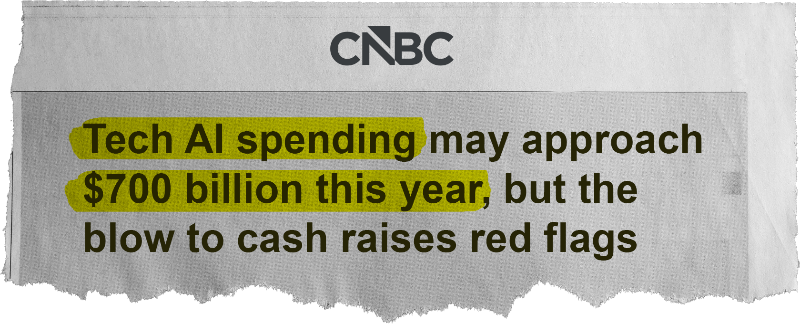
That's a 60% increase over what they spent last year. And last year was already a record.
They are buying every chip, every memory module, every piece of server hardware they can get their hands on. And it's not enough.
To give you an idea…
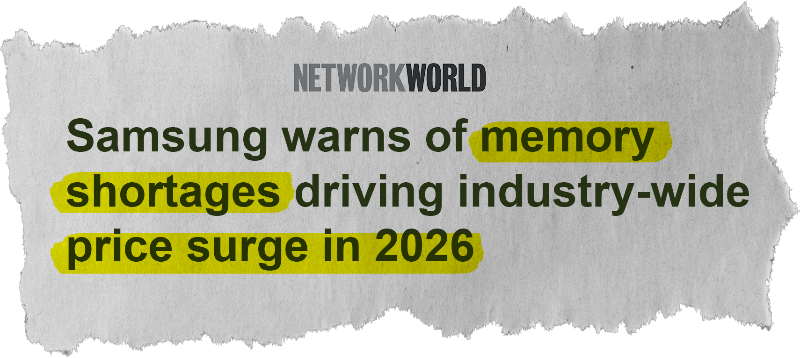
Samsung... one of the world's largest memory makers... just told Bloomberg: "In 2026, there's going to be issues around semiconductor supplies, and it's going to affect everyone."
Aaron:
Everyone?
Jim:
Correct. Big Tech is in full-blown panic mode. And I can prove it.
NVIDIA has locked up over 60% of the world's critical advanced chip making capacity at Taiwan Semiconductor.
TSM is the only company on earth that can do this kind of work at scale.
And NVIDIA, Broadcom and AMD – they’re taking all the marbles.
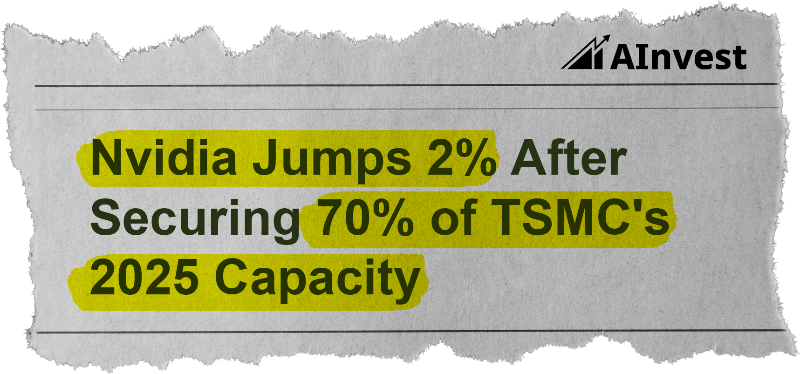
Which leaves just 15% of their capacity for the rest of the world.
Aaron:
Wait…
Is this what you were talking about when you said something unprecedented is happening in Silicon Valley?
Jim:
That's right. And this is only the beginning…
The companies that can afford to spend... Amazon, Google, Meta, Microsoft... are locking up the supply. And everyone else is getting squeezed out.
Aaron:
So, the chips are selling out. The memory is gone.
Prices are through the roof.
But Jim... I’ve got to ask.
Can't they just build more factories? More chip fabs? Throw money at the problem until it goes away?
Jim:
That's the right question. Now, you might remember what happened during COVID…
It was only a few years ago…
And the cost of a new car exploded so high - people were lining up to pay up to 92% ABOVE the sticker price. That’s almost like buying ONE car for the price of two.

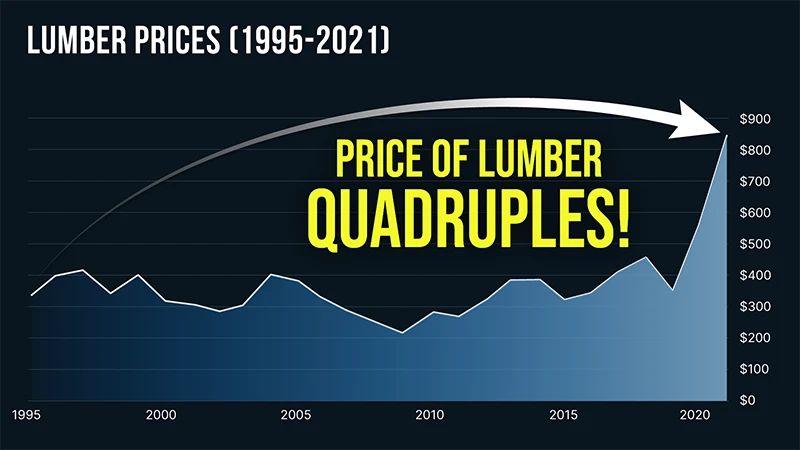
The price of lumber QUADRUPLED. Along with the soaring cost of home construction.
And many popular items at the store - from baby formula to appliances and toilet paper - simply vanished overnight.
But this crisis is different…
Because manufacturing is not shut down. It’s running at full tilt!
Aaron:
So, the limiting factor isn’t factories at all?
Jim:
Right… Every chip factory, every data center, every piece of AI infrastructure on earth... depends on physical materials.
Commodities. Stuff you dig out of the ground.
And that's where this story takes a very dark turn.
THE CRISIS GOES DEEPER
Take copper, for example…
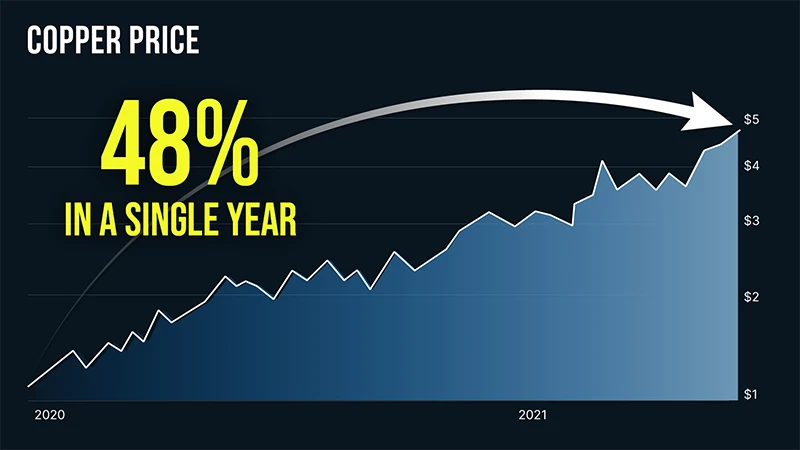
It’s the nervous system of the modern world.
Most people don’t realize this but…
A single one-gigawatt AI data center uses 50,000 tons of copper. That's the same amount you'd need to build 600,000 electric vehicles!
Aaron:
50,000 tons. For one facility.

Jim:
For one facility. And we are building dozens of them.
Aaron:
So that explains why copper hit an all-time high in 2025. Up 48% in a year.
Jim:
Correct…
And here's what worries me...
The International Energy Agency says even if every copper mining project in the world goes into full production... we’ll still face a 30% supply gap by in less than a decade .
And copper is just one tiny part of the story.
Consider silver.
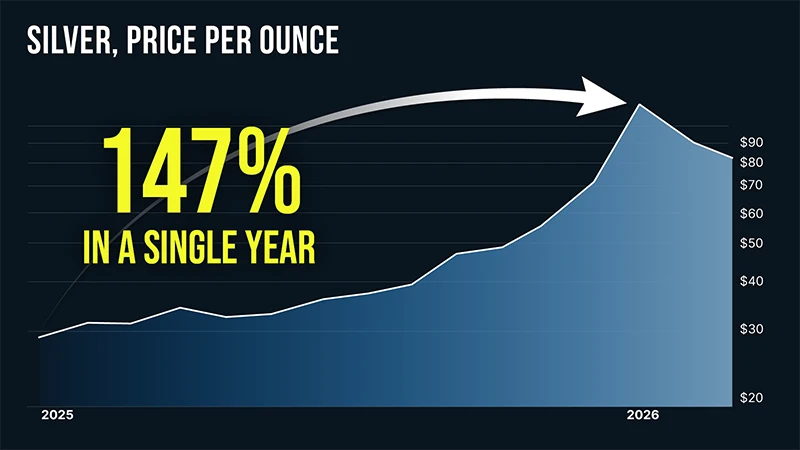
In early 2025, silver traded for $29 an ounce. But it ended the year above $72. A 147% gain in a single year. Then, it hit a new all-time high in January.
Aaron:
A lot of folks might call it a “bubble.”
Jim:
Not exactly… The truth is more complex.
Because the silver market has been in a structural deficit for five years.
In plain English, that means demand exceeds supply. Every single year. And the shortfall in 2025 alone was roughly 100 million ounces. We’re running out of time… and this critical metal.
Aaron:
Wow… I mean – who’s buying up all this silver?
Jim:
Well, it’s not just coin collectors and bullion banks.
Silver goes into everything!
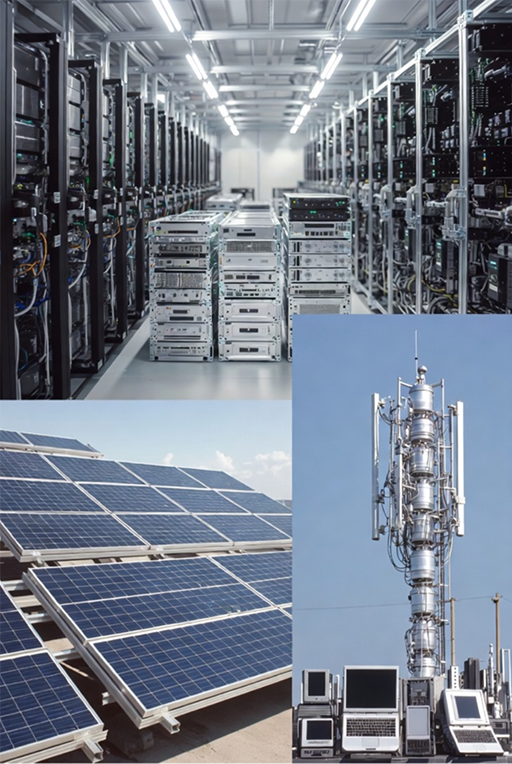
AI server farms use two to three times more silver than traditional data centers...
Solar panels alone will consume 230 million ounces of silver by the end of this year.
While electronics and 5G consume another 240 million ounces a year.
And here's the kicker. 70% of the world's silver supply comes as a byproduct of other mining... copper, lead, zinc. That means producers cannot ramp up silver production in response to price.
It doesn't matter how high silver goes. If you're a copper miner, you don't mine more copper just because silver is expensive.
Aaron:
So what you’re saying is… even if there’s a bunch of silver left out there - it’s not easy to get our hands on it.
Jim:
Right. And that’s why you’re seeing all kinds of strange behavior…
Like this year, when China started banning exports
THE CHOKEPOINT
Aaron:
Hold on…
You just said they placed silver under export controls. And I know they’ve done the same with gallium, germanium, antimony…
How many of these critical minerals does China control?
Jim:
This is what’s so terrifying…
Everything I just described… From the chips selling out to the copper running dry to the silver deficit…
All of that assumes we can get our hands on the raw materials.
But there’s a single country that controls the supply of nearly every mineral essential to semiconductors, AI chips, and advanced technology. And that country just put 12 of them under export control.
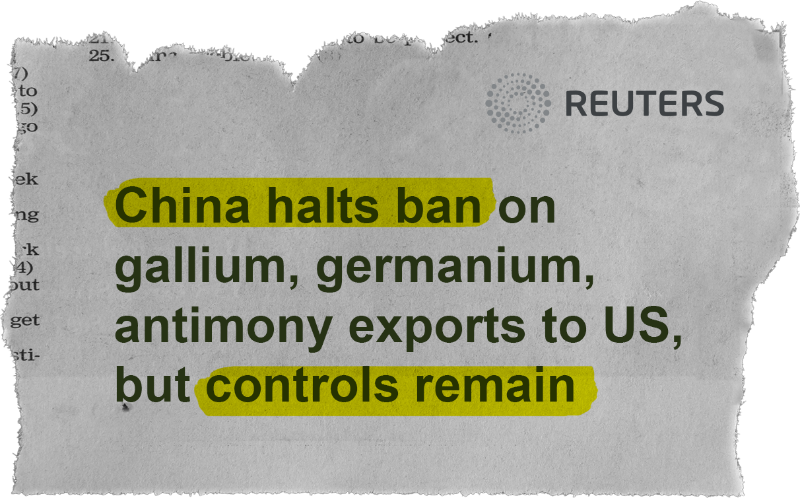
This is no joke! It’s a national security crisis.
China produces 70% of the world's rare earth supply and controls 90% of the refining capacity.
That’s why, when they cut off gallium exports in late 2025... prices spiked more than 75%.
Aaron:
Ok, point taken. But I’ve heard America has its own impressive stash of rare earth minerals. So why do we need China?
Jim:
You’re right…
But we can’t just “flip a switch” and start mining gallium or other rare earths. Even if we could get them all out of the ground this year – we’d have no way to process them.
Aaron:
Oh, so that’s the pinch-point? China has almost total control of processing these minerals and bringing them to market.
Jim:
Exactly. And here’s the problem…
Analysts estimate it will take three to seven years for the United States to meaningfully reduce its dependence on Chinese rare earth processing. Three to seven years. And in the meantime, China has its hand on the kill switch.
Aaron:
So just to be clear... the AI revolution... the entire technology buildout we're talking about... depends on materials that a hostile foreign power can cut off at any time.
Jim:
At any time. With the stroke of a pen. Just like OPEC did with oil in 1973.
Aaron:
Which means… The AI arms race is consuming every chip on earth.
Those chips require materials we can’t mine fast enough.
And the materials we need are controlled by a country that’s actively restricting supply.
Is that the whole picture?
Jim:
No. There’s one final link in this chain. And in some ways, it’s the most fragile part of this story.
Even if you solved every problem I just described… found new chip capacity, opened new mines, broke free from China… you’d still hit this wall.
We don’t have nearly enough power… electricity… energy…
OUR POWER GRID HAS REACHED A BREAKING POINT
Aaron:
Well, it seems kind of… obvious.
All this technology... from chips to data centers... it needs power. Enormous amounts of power. Some communities are so upset… because these data centers have caused power bills to spike, overnight.
Jim:
That’s right....
Data centers in Northern Virginia alone already consume 25% of the state's entire electricity supply. And there are 15 gigawatts more planned.
Let me give you the numbers.
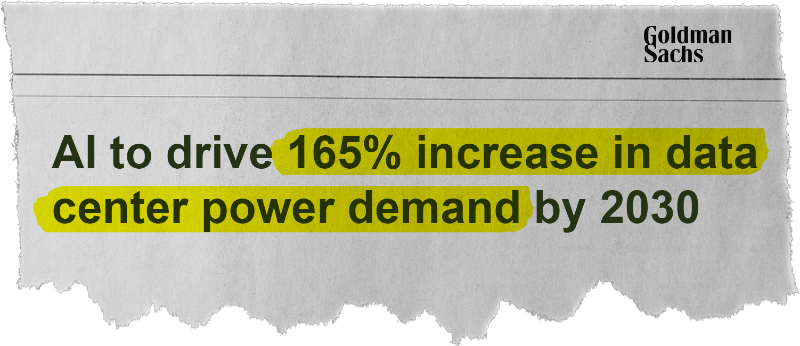
U.S. data center power demand was 33 gigawatts in 2024.
It jumped to 41 gigawatts in 2025.
By 2030, it's projected to hit 120 gigawatts. Triple the demand we have today.
That’s the equivalent of building over 1,000 new power plants!
Aaron:
How on earth will the grid handle this power surge?
Jim:
That’s a billion-dollar question…
This is the first big increase in U.S. electricity demand in almost 20 years. It's being driven almost entirely by AI. And there’s no easy solution.
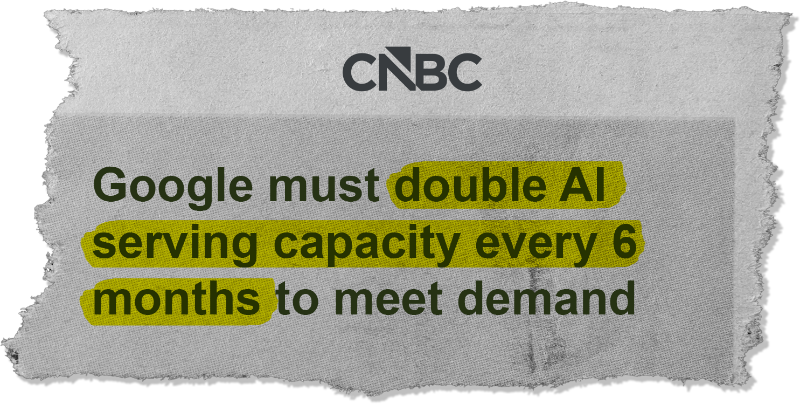
Consider just one of the MAG 7 companies, Google. It just said publicly that it has to double its power capacity every six months to keep up with demand.
You don’t have to be an energy expert to realize, it’s not possible. And what are these companies doing? They're building their own, private grid. So, while the rest of us suffer from potential outages – they’ll be humming along, just fine.
Aaron:
How are they supposed to build their own grid from scratch?
Jim:
Well, look at the facts…
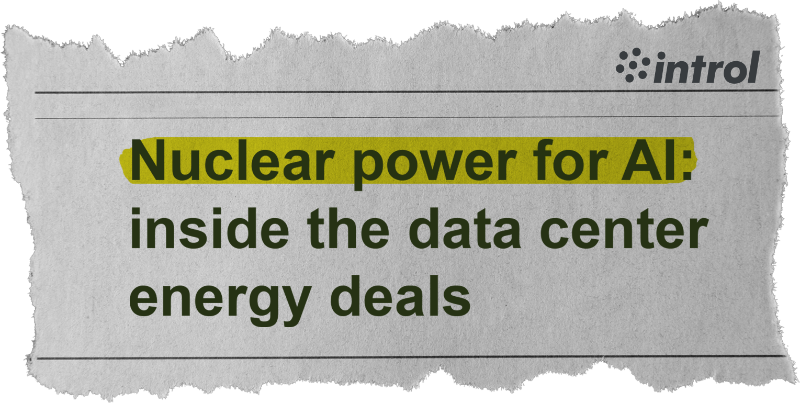
Microsoft signed a $1.6 billion, 20-year deal to restart Three Mile Island. Yes, that Three Mile Island.
Amazon locked up 1.9 gigawatts from a nuclear plant and invested $500 million in small modular reactor development.
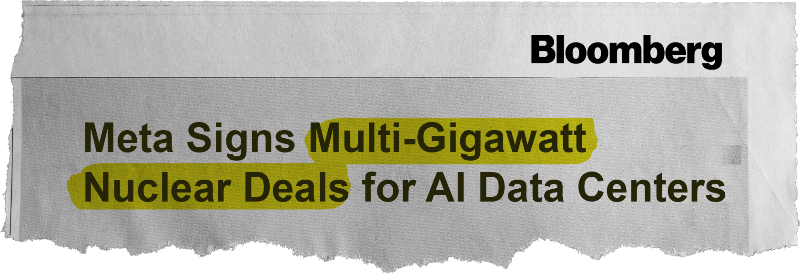
Meta signed a deal for 1,100 megawatts from a nuclear plant in Illinois.
In total, Big Tech has signed contracts for more than 10 gigawatts of new nuclear capacity in the past year alone.
Aaron:
So, they're spending billions on nuclear reactors... just to keep the lights on?
Jim:
Look… There is no alternative. The old grid can’t support what they're doing.
You can print money. You can manufacture chips. But you can’t borrow energy from the future.
Aaron:
Jim… I want to step back for a second. Because when you started this, I thought we were talking about a chip shortage. But what you’ve just shown us is…something bigger.
Jim:
You’re right. This is not just an isolated crisis. We’re facing a chain reaction.
The AI arms race is consuming every chip on earth.
Chips need new raw materials we can’t mine fast enough.
Those materials are controlled by a hostile power.
And the system we’re building runs on energy we don’t have.
Every link in that chain is strained to the breaking point. And each weak link makes the next one more brittle.
So, in 1973, one commodity - oil - brought the economy to its knees. That was the Oil Shock.
What I’ve just walked you through is the same force…
Except this time, it’s depleting every resource the modern world depends on, simultaneously.
This is the Tech Shock. And it’s already here.
TECH CEOS ARE PANICKING
Aaron:
Jim, when you lay all of this out... it sounds alarming. But I want to make sure our viewers understand... your assessment is one thing. But the people running these companies... they're echoing your claims .
Jim:
They are.
Jensen Huang... the CEO of Nvidia... the most important chipmaker on earth... told investors demand is so extreme, his customer relationships have become... in his words... "emotional."
He said, quote:
Aaron:
What did he mean by that?
Jim:
His customers are living “on the razor’s edge” - and there’s not enough supply to go around.
And it’s not just NVIDIA…
Micron is one of only three companies in the world that makes memory chips...
Recently, their CEO told investors:
He added, they can only fill about half of their orders. And they don't expect the tightness to ease beyond 2026.
Aaron:
Half their orders. That's it?
Jim:
That's it. And it gets worse.
Dell's chief operating officer said he has "never seen costs escalating at the current pace."
While Lenovo's CFO called it "unprecedented" and admitted they're stockpiling memory chips at 50% above normal inventory levels... just to make sure they can keep building laptops.
Aaron:
So, the people building AI can't get enough chips.
The people making chips can't get enough capacity.
The grid can't produce enough power.
And the ground can't produce enough copper, silver, or rare earths to wire it all together.
Jim:
You got it. That is the Tech Shock, in a nutshell. And it could dramatically reshape the economy and the stock market in the months ahead.
Historians have a term for this.
They call it Dutch Disease.
Aaron:
Dutch Disease?
Jim:
Yes… It's what happens when one sector of the economy becomes so dominant that it drains the capital, the talent, and the resources from everything else.
It happened to the Netherlands when they discovered natural gas.
Manufacturing employment dropped 25% collapse… as labor and capital drained into the energy sector.
It happened to oil states in the Middle East… where oil revenues became a HUGE part of their GDP… starving every other sector of oxygen.
And it's happening right now with AI. It’s crowding just about everything else out.
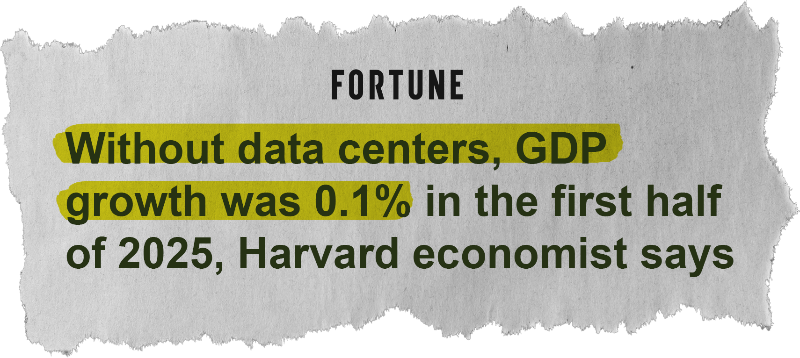
I mean look… over 90% of all GDP growth is coming from what? Data centers.
Right before our eyes, AI is consuming the rest of the economy.
Every link in the chain is strained to the breaking point. And nobody... not the chip CEOs, not the tech giants, not the grid operators... nobody has a solution.
But if you can sense what’s coming... and position yourself in the right assets... you could see the kind of returns in a few years that normally take a lifetime.
That's why I'm here today.
HOW BAD COULD IT GET?
Aaron:
Jim, I think our viewers are starting to understand the scope of this. But I want to bring it home. Because numbers like "$700 billion" and "60 gigawatts" are hard to wrap your head around. What does the Tech Shock look like... in people's lives? In their portfolios? At the kitchen table?
Jim:
Right… These are all big questions.
One think to keep in mind is… take a breath.
The world didn’t end during the oil shock of 1973. And it didn’t end because of COVID. And it won’t end this time, either.
But the world is changing in ways most people can’t fathom.
Let me paint the picture.
We’ll start with investors.
Right now, the five biggest companies in America are spending nearly $700 billion this year on AI infrastructure.
That is 94% of their operating cash flows.
In 2024, they spent around 76%.
Aaron:
So it’s trending up…
Jim:
Way up…
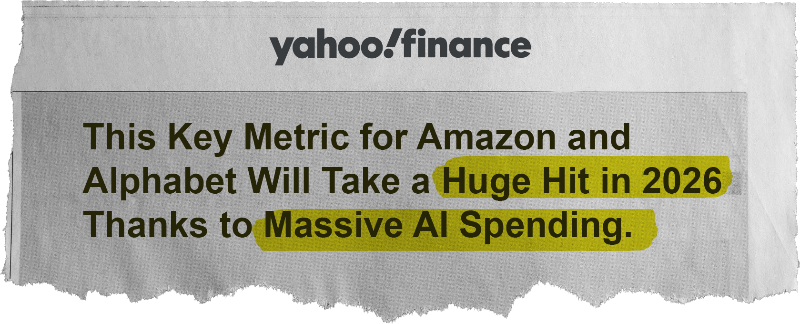
Amazon is projected to run negative free cash flow this year.
Google's free cash flow is expected to drop almost 90%.
So they're borrowing to cover the gap.
Tech companies issued $428 billion in bonds last year to fund this buildout.
Google in fact just issued its first ever 100-year bonds. Think about that!
And JP Morgan estimates the whole thing will require $1.5 trillion in new debt over the next five years.
Aaron:
$1.5 trillion in debt.
Jim:
Correct.
And it gets even crazier when you consider how the S&P 500 is being held up by just a handful of companies. The MAG 7.
If they stumble?
They don't just take tech down. They could take everything down.
Aaron:
Everything? I want to make sure people understand what that means… Because a lot of folks watching this have a 401(k) or an IRA. They’ve been saving and investing for decades. How exposed are they?
Jim:
Very. And most people don’t realize it.
Right now, the MAG 7 makes up roughly a third of the entire S&P 500. So if you own an index fund - and most retirement accounts do - about one out of every three dollars you have in the market is riding on these companies.
The same companies that are burning through cash. Issuing hundreds of billions in debt. All to fund an AI buildout that hasn’t proven it can generate a return.
Aaron:
And Wall Street is already reacting to this…
Jim:
It is. Recently, Microsoft, Amazon, NVIDIA, Meta, Google and Oracle lost a combined $1.35 trillion in market value. In just five days.
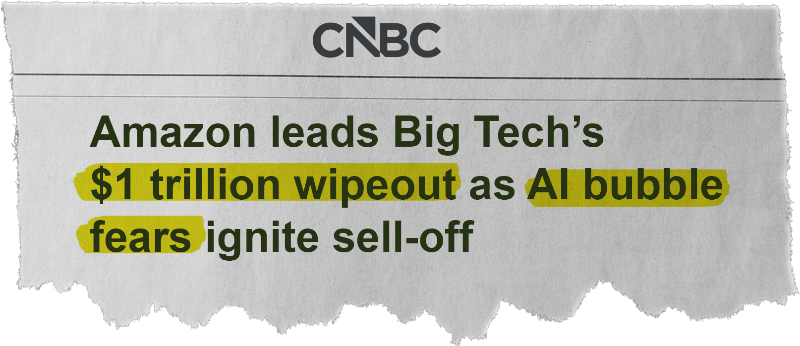
Amazon reported record revenue Yet its stock fell for nine straight sessions, shedding $450 billion in value. Why? Because investors realized its cash is almost gone.
Microsoft beat earnings expectations and dropped. Google beat earnings and dropped. The market has stopped rewarding growth. Instead, it’s punishing the spending.
Aaron:
So even good news is being treated as bad news.
Jim:
Because the market is starting to ask an uncomfortable question: "What if the AI spending never pays off?"
Goldman Sachs estimates the market has priced in $19 trillion worth of AI gains. But their own analysis of what AI is worth to the economy? It’s $8 trillion… Not even half!
And the chairman of OpenAI, the company that started this whole thing, went on the record and said,
Aaron:
The chairman of OpenAI said that?
Jim:
He did. And he’s not alone. The Chief Investment Officer at Morgan Stanley warned that we could be heading for what she called a “Cisco moment.”
For those who don't remember, Cisco was the most valuable company in the world during the dot-com boom. They sold the infrastructure that made the Internet work.
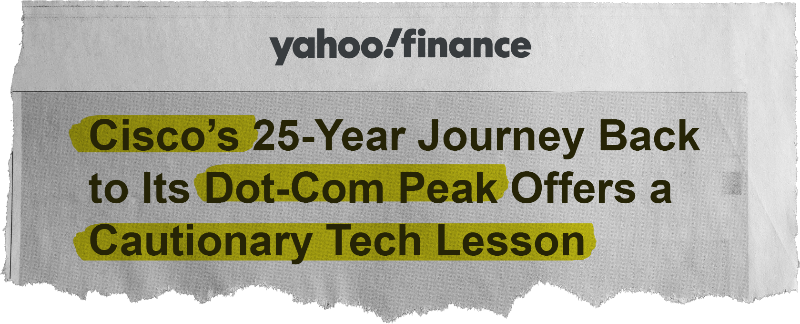
Sound familiar? Their stock fell 80% and it took over 25 years to recover.
The Internet didn't die, but investors in the company building it got destroyed.
Now, I don't have a crystal ball, and I can't say 100% this is how it will play out, once again. But that’s the risk I see today. The AI revolution may be real, but the stocks funding it are in serious trouble, and your retirement account is in the blast radius.
A SUCKER-PUNCH TO AMERICA
Aaron:
So there are clear risks to investors. What about regular people? What does this look like at the kitchen table?
Jim:
This is where the 1970s parallel gets kind of eerie.
I believe we’re heading straight for rationing. All kind of products could disappear – or be priced out of reach.
Aaron:
Rising prices and rationing. Like wartime.
Jim:
Right.
Here's how crazy it's become...
Last year, you could buy 64 gigabytes of computer memory for about $200.
Today? Over $1,000.
That's a 300% increase.
In fact, 64 gigs of RAM now costs as much or more than a brand-new MacBook.
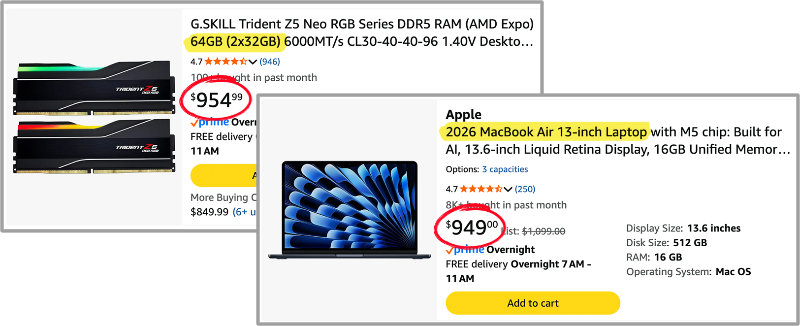
Think about that. The memory inside your computer costs more than an entire computer.
That's what happens when every data center on the planet is hoarding every chip and every memory module it can get its hands on. There's nothing left for the rest of us.
And it's only getting worse.
People in the tech world are openly telling each other —and I quote:
"Buy your hardware NOW. Not next quarter. Not next year. Now."
And this isn’t hypothetical. It’s already happening!
Apple - the biggest consumer tech company on earth - is seeing delivery times stretch to six weeks or more for high-end Macs. And they warned investors the profit margins on iPhone margins is being compressed.
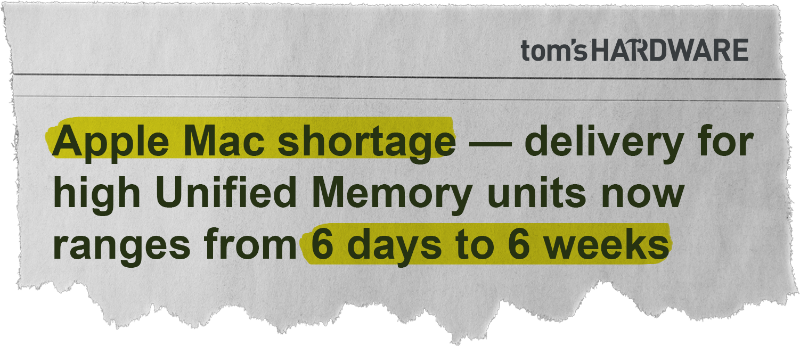
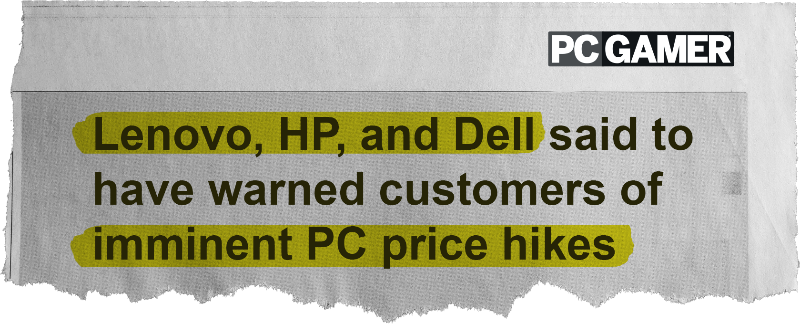
Dell, Lenovo and HP have all raised laptop prices 15 to 20% since December. And it could get worse.
Micron… one of the three biggest memory chip makers in the world… just killed its consumer brand, Crucial.
After 29 years, they shut it down entirely to redirect every chip they make to AI datacenters.
This is what happens when trillion-dollar companies are bidding against you for every component in your phone, your laptop, your car. Who do you think’s going to win?
So, this isn't some abstract Wall Street problem. This is the computer your kid needs for school. The phone in your pocket. The car in your driveway. Every piece of technology you touch is about to get more expensive. If you can find it at all.
But even if you don’t plan on buying anything new this year…
We’ve also got to deal with the soaring price of electricity.
Data centers are consuming so much power, electricity prices in some places have reached unthinkable heights.
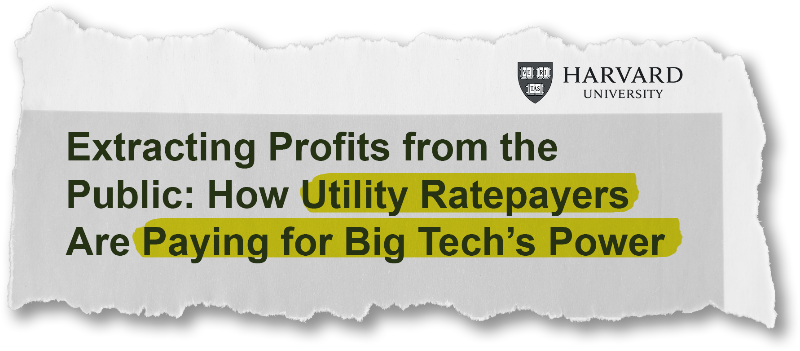
They didn’t just double or triple. In one market, serving 65 million people across 13 states... prices leapt nine-fold. From $29 per megawatt to as much as $329.
Aaron:
Eleven times higher? Where is that? It doesn’t seem fair!
Jim:
It’s a huge area, including all or parts of 13 states stretching from the Midwest to New Jersey plus Washington D.C.
And to make matters worse…
Many datacenters are getting discounted electricity rates. Sweetheart deals from the utilities. The trillion-dollar companies pay less per kilowatt and you pay more.
Two years ago, Elon Musk predicted this…
Back in March 2024, he said, "I've never seen any technology advance faster than this." Then he dropped a bombshell.
He said the next crisis won't be chips. It'll be electricity.
He was right. Soon there might not be enough energy to power all the chips we're building.
Aaron:
You know... it kind of reminds me of the gas lines from the 1970s.
Jim:
It is. Except in the '70s, you went to fill up your tank… and could see the line stretching down the block. We knew OPEC had turned off the tap.
The enemy was the Arab states.
This time, the problem is hitting everywhere, all at once.
OMINOUS CRACKS ARE FORMING ON MAIN STREET
Aaron:
Speaking of that… What about main street? The small business owner watching this right now? Like the corner bakery, the dry cleaner, or small manufacturers…
Jim:
Unfortunately, it will only get worse.
Not because suppliers are shut down. They're running full speed.
They're simply choosing to sell to NVIDIA or Microsoft instead of automakers, medical device companies, and industrial equipment manufacturers.
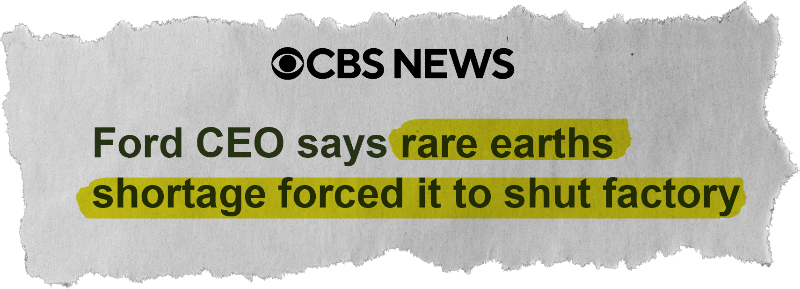
That’s why Ford had to temporarily shut down a plant… They couldn't get rare earth magnets.
And it goes on and on…
Hospitals need chips for MRI machines, patient monitors, pacemakers.
Schools need chips for laptops and Chromebooks.
And every one of them is competing against big tech companies spending $700 billion a year.
Who do you think wins that bidding war?
Aaron:
Well, it seems obvious: The companies that are spending $700 billion.
Jim:
Every time.
So let’s zoom out for a second…
In 1973, a shortage of one commodity... oil... was enough to crash the stock market 45%. To push inflation to 12%. To plunge the country into the worst recession since the Great Depression.
What I've just described to you is that same dynamic... playing out simultaneously across chips, memory, copper, silver, rare earths, uranium, and electricity. Every input the modern economy needs.
All in danger of critical shortages.
Each being consumed by the AI arms race faster than anyone predicted.
Most people have no idea this is happening… because they don’t see any “lines forming” anywhere in modern life. At the Apple Store… or at the gas pump. And we’re not yet seeing “sold out” signs pop up at Amazon.com.
But don’t let that lull you into a false sense of security.
Aaron:
So, this isn’t a crisis we will sense, until it’s too late?
Jim:
The tech shock is here.
HOW TO PROTECT YOURSELF AND PROFIT
Aaron:
All right Jim. You've laid out the crisis. You've shown us the parallels. So the question every viewer is asking right now is... what can we do about it?
Jim:
Let me be direct.
I rarely pick tech stocks. I'm not a software analyst. I'm not going to tell you which AI chatbot is going to win.
What I do... what I've spent almost half a century doing... is identifying systemic chokepoints. The physical bottlenecks that every company, every government, every economy depends on. And then positioning in the assets that benefit from scarcity.
That’s what I did after the oil crisis.
It's what I saw at Long Term Capital Management.
It's what I advised the Pentagon on.
And it's exactly what the looming Tech Shock demands right now.
If we were to run through all the details today – it would take another couple hours.
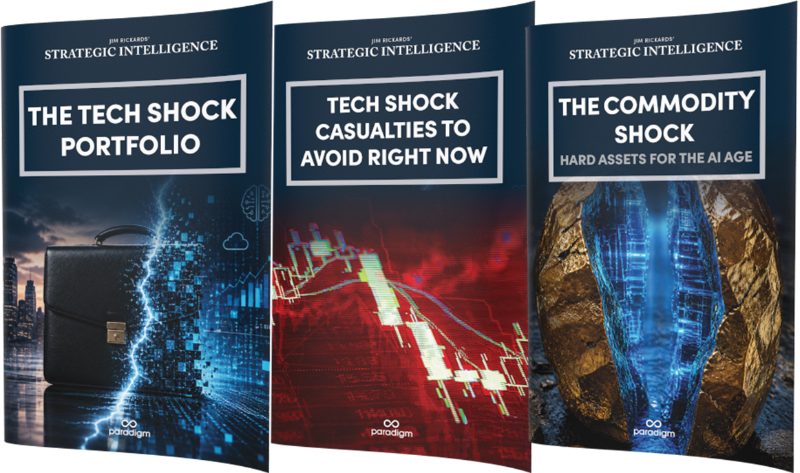
So what I’ve done is… package all my thinking and research into three easy-to-read reports.
And we’re making them available to anyone watching today.
Each one addresses a different dimension of this crisis... to help you protect yourself... and potentially profit.
Of course, past performance never guarantees future results. And it goes without saying you should never invest money that you cannot afford to lose.
But this could be the most important factor in your financial life… by far, this year.
Aaron:
OK – I’m being told your first report is called the “Tech Shock Portfolio.” That seems fitting. What’s it all about?
REPORT #1: "THE TECH SHOCK PORTFOLIO"
Jim:
The first report identifies the companies positioned to profit directly from the Tech Shock.
Memory chip makers sitting on sold-out capacity... with pricing power they haven't seen in decades. Foundries that are the only game in town for advanced chip manufacturing. Infrastructure companies building the backbone of the AI buildout.
These are companies that most AI investors have never even considered. And they could be some of the biggest winners of the entire cycle.
Aaron:
So this goes way beyond big tech. You’re talking about the “backbone” of this technology and the massive buildout that’s underway.
Jim:
Exactly.
The companies that control the building blocks of AI are in a position of power right now.
For example…
There's one company that sits at the nexus of the entire energy infrastructure buildout. Every data center, every power plant, every pipeline expansion… they supply the critical industrial components that make it all work.
Pipes, valves, fittings, pumps. The boring stuff nobody thinks about... until there's a shortage.
They're small. They're under the radar. And they're positioned to benefit from every dollar of that $700 billion spend.
There's also a company in the chemicals space...
Aaron:
Chemicals? And what does that have to do with technology?
Jim:
Most people don’t know this… But semiconductor manufacturing requires enormous quantities of specialty chemicals. This company produces them. And as chip fabs race to expand capacity... demand for what they make is going through the roof.
I lay out the full case for both these stocks… plus several more… in my first report.
Aaron:
Fascinating. So some of these companies will thrive.
But based on what you told me today, the opposite is also true. Not every company will survive this crisis.
And that brings us to your second special report. “Tech Shock Casualties to Sell Now.”
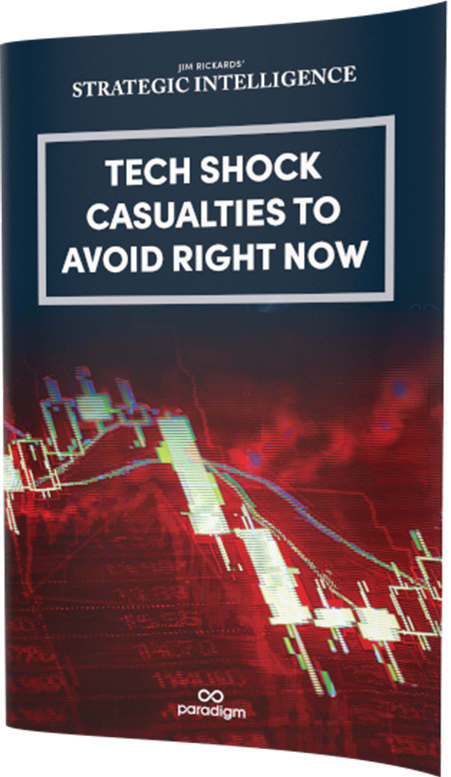
REPORT #2: “TECH SHOCK CASUALTIES TO AVOID RIGHT NOW"
Jim:
Right. The second report is just as important. Because there are dozens of stocks that could soon get crushed.
Consumer electronics companies watching their margins evaporate as memory costs triple.
Firms that depend on Chinese rare earth supply...
They’re all in big trouble.
Now, this really isn’t making headlines just yet…
But 84% of enterprises are now reporting margin erosion from AI costs.
In plain English that means, their profits are being overtaken by expenses. And before long, they will be losing money.
That’s the whole point of this report…
Inside, you’ll see which sectors and companies are most exposed... so you can protect yourself. And in some cases, profit from their decline. Some of these stocks could easily fall 20%... even 50% or more. And they’re likely sitting in millions of retirement accounts, right now.
Aaron:
The winners and the losers. Both sides of the Tech Shock.
Jim:
Correct. A crisis like this... it will reshape the market and the economy. So it’s critical you’re prepared.
Aaron:
Alright. So, we touched on the tech winners and losers. Companies that will thrive and those that could be crippled by the coming shortages.
But there’s one area I know a lot of folks are interested in and that’s commodities – the real building blocks of tech.
And if I understand you correctly, this is where we could find the greatest bottlenecks… but also the greatest upside.
Which brings us to your third report.
REPORT #3: "THE COMMODITY SHOCK: HARD ASSETS FOR THE AI AGE"

Jim:
Correct. In this third report... this is where I believe the single biggest opportunity lies.
In the 1970s, the investors who made fortunes didn’t hoard oil. They owned the companies that produced it. The miners. The drillers. The pipelines.
The same opportunity exists today.
Hard assets from copper to silver and uranium – they underpin the entire AI revolution. And right now... most investors are completely ignoring them.
Instead, they’re salivating over the Open AI or Anthropic IPOs – which is a huge mistake.
Aaron:
Really? You think those IPOs will be a bust?
Jim:
I'm not saying they won't be well received. But my research shows there's more upside and measurably less risk in a different sector of the market.
And that's the focus of my third report. This one lays out my top picks across copper, silver, uranium, and rare earths. With specific entry points and price targets.
Here’s a preview of what you’ll find inside…
In silver... I've identified a mining company most investors overlook entirely.
It's not a household name. But it sits on some of the richest deposits in the Americas.
And with silver in a structural deficit for five straight years… and AI data centers consuming two to three times more silver than traditional facilities… this company's reserves are becoming more valuable by the day.
In uranium... you already heard me explain that Big Tech is restarting nuclear reactors.
Microsoft brought back Three Mile Island.
Amazon invested half a billion in small modular reactors.
Meta signed a deal for over a gigawatt of nuclear power.
All of that requires fuel. And there are only a handful of ways to play the uranium supply chain. I've found what I believe is the best one. It gives you broad exposure to the entire uranium mining sector in a single position.
In gold... I've been pounding the table on miners for over a year now. Some of my picks in this space are up 73% (in 8 months)... 163% (in 11 months)... even 180% (in 16 months).
And I believe there's still significant upside ahead, because gold thrives in exactly this kind of environment… when governments are spending recklessly, supply chains are breaking, and the world is getting more dangerous by the day.
And finally, in energy... we have the companies producing and transporting the oil, gas, and power data centers desperately need.
Several of them are still trading at bargain valuations. I've got picks across the energy spectrum.
They’re all positioned to benefit as electricity demand surges.
Everything is inside my third report:
The Commodity Shock: Hard Assets for the AI Age.
Aaron:
OK so to recap. That’s three reports. The winners, the losers, and the commodity plays behind it all.
Jim:
That's right. And they're yours free when you try my research service today, Strategic Intelligence.
Aaron:
So, Jim, tell us more about Strategic Intelligence. For anyone who hasn't heard of it.
Jim:
Strategic Intelligence is my flagship research service. I've been publishing it for years.

Each month, I put out a new issue covering the most important developments in global markets, geopolitics, and macroeconomics... and I translate that into specific, actionable investment recommendations.
We focus on what we know best.
- Systemic risk.
- Commodity cycles.
- Currency dynamics.
- Geopolitical flashpoints.
- And hidden forces that move entire markets... not just individual stocks.
Each month you get my detailed writeup…
And to make it as simple as possible, each recommendation goes into a model portfolio with clear buy, sell, and hold signals.
So you always know exactly where you stand.
AN INSIDER'S GUIDE TO THE TECH SHOCK OF 2026
Aaron:
And your track record speaks for itself.
Few believed you back in 2008 when you warned of a looming stock market crash. But that’s precisely what happened. Stocks cratered 54%.
Then in 2016, you said Trump would become our next President. At the time, polls gave him a 1 or 2% chance. But again, you were right.
Then came 2020…
We all know what happened that year. But few people saw it coming. And hardly anyone listened when you warned of the coming pandemic and lockdowns.

Jim:
I've been right on some very big calls. And I don't say that to brag... I say it because timing is everything.
And I've been researching this latest development - the Tech Shock for over a year...
Aaron:
So how much does access to Strategic Intelligence typically cost?
Jim:
On Wall Street, the kind of research I do... geopolitical risk analysis, commodity cycle positioning, macroeconomic forecasting... it can cost well into six figures a year. The Bloomberg Terminal alone costs over $30,000 a year. And that's just the data... not the analysis.
But I’m not interested making billionaires any richer. That’s why I walked away from Wall Street and started sharing my deepest insights with the public…
At a price that’s far below what I once charged my institutional clients.
Normally, Strategic Intelligence costs $299 for a six-month subscription. But for viewers watching today... I've worked out a special arrangement with my publisher.
Aaron:
Let me take a look at this.
OK folks. This is, Jim… I have to say, this is a surprise.
Here's what you are offering.
When you join Strategic Intelligence through the link below this presentation... you won't pay the full $299. You'll pay just $49 for six full months of Jim's research. That gets you monthly issues. Full access to the model portfolio. And all three of the special reports we discussed today.

Jim:
And I want to be clear about this. You can try Strategic Intelligence at my risk, not yours.

Your subscription is backed by a 90-day, 100% money-back guarantee. Look through my research for 90 full days. Read the reports. Check the model portfolio. And if it's not for you... call my team. They'll issue a full refund on your subscription. No questions asked.
Aaron:
Wow, that is beyond generous.
Let me recap everything you get today.
All three special reports:
- The Tech Shock Portfolio...
- The Tech Shock Casualties... and
- The Commodity Shock: Hard Assets for the AI Age.
Six months of Strategic Intelligence... Jim's monthly research, analysis, and investment recommendations.
Full access to the model portfolio.
Jim:
And I should mention... anyone who joins today also gets full access to my complete library of back issues and special reports. Including my latest work on gold, de-dollarization, and the nuclear energy renaissance. All of it is yours the moment you sign up.
Aaron:
All of that... for $49 ... backed by a 90-day money-back guarantee.
OK, Jim, before we wrap up... is there anything else you'd like to say to our viewers?
Jim:
Yes. I want to speak directly to everyone watching right now.
In 1973... most Americans had no idea what was about to hit them. They didn't understand how a crisis halfway around the world could empty their gas tanks... crash their portfolios... and send inflation through the roof.
By the time they figured it out, it was too late. The lines were already five miles long. The stock market had already cratered. Their purchasing power was cut in half.
I was there. Front and center in DC. And I spent the next five decades inside the system that was built in response.
In many ways, it shaped our modern world.
But I am telling you... the Tech Shock that is unfolding right now is going to completely change the rules of geopolitics and investing.
It’s the Oil Shock... times ten.
Remember, back in 1973, one commodity came between our economy and disaster.
Back then it was “black gold.”
Today it's chips. Memory. Copper. Silver. Rare earths. Uranium. Electricity. Every single one in shortage. Each is being consumed by the AI arms race faster than anyone predicted.
Memory prices have already doubled.
Copper has already hit all-time highs.
Silver has been in deficit for five straight years.
China has its hand on the kill switch for a dozen critical minerals.
The question is not whether the Tech Shock is here.
The question is whether you'll be positioned when the full force of it hits.
You essentially have two choices.
You can walk away from this presentation... and hope for the best...
Or... for what amounts to a few cents a day... you can let me do the work. You can let me and my team of researchers guide you through this... the same way I've guided readers through the 2008 collapse, the pandemic, the “surprise” election of Donald Trump and everything in between.
Aaron:
Jim, to me it almost seems like a no brainer.
The folks at home risk nothing by taking a look at your research today.
They have a full 90 days to look it over.
And if they aren’t completely satisfied, they’ll get EVERY dime back.
Jim:
You have nothing to lose.
And if I'm even half right... you have everything to gain.
Aaron:
Jim – I want to thank you again for stepping away from your busy schedule to join us today. It’s been a pleasure interviewing you. In the past several minutes the questions have come pouring in. By any chance can you stick around just a few moments to answer a few?
Jim:
Sure. I’m happy to help.
Aaron:
Jim, ok – great.
YOUR QUESTIONS, ANSWERED
Let’s see. The first question is a bit of a zinger:
We had a chip shortage during COVID. It was all over the news. And then... it resolved itself. Prices came back down. Supply chains caught up. So why is this time any different?
Jim:
It's a fair question. But it's the wrong comparison. The COVID chip shortage happened because factories shut down. Workers couldn't show up.
Once the factories reopened, production ramped back up and the backlog cleared in roughly 2 years.
What we're dealing with now is the opposite. The factories are running at full capacity. And it's still not enough.
The demand side has exploded beyond anything the industry was built to handle. You can't fix a demand shock by red-lining a factory that's already maxed out. You have to build new ones. And new fabs take three to five years and $20 billion or more to bring online.
Aaron:
OK. That’s fascinating. And it makes total sense.
Onto the second question. The chairman of OpenAI has said, we're in a bubble. If the people building AI think it's a bubble... why on earth would I put my money anywhere near it?
Jim:
Because the bubble and the shortage are two different things. And most people confuse them.
The bubble is in AI software valuations. Companies with no revenue trading at absurd multiples.
But the physical inputs... the chips, the copper, the silver, the uranium... those don't go away when a bubble pops. If anything, they become more valuable as the buildout continues.
Look, even after the dot-com crash... even after 90% of internet companies went bankrupt... the internet continued to grow. And that's where the real opportunity is.
Aaron:
Well said. OK third question. I know this is on a lot of folks’ minds.
What about China? You made a big deal about their rare earth controls. But what if they’re just talking tough?
Do you really think they’ll cut off the world's supply of gallium and crash their own export economy? Couldn't they ease those restrictions tomorrow and make your whole thesis fall apart?
Jim:
Sure. They could ease their restrictions. But they won't. And here’s why…
China watched what we did to Russia after the Ukraine invasion. We weaponized the dollar. We froze $300 billion in reserves. We cut them off from SWIFT. And China learned the lesson... you need your own leverage.
Rare earths are their leverage.
Besides… even if China lifted every restriction tomorrow morning... it would take three to seven years for the West to build its own refining capacity. We don't have the facilities. We don't have the workforce. We barely have the permits. MP Materials runs the only active rare earth mine in the United States... and until recently, they shipped most of their output to China for processing.
So the question isn't, “Will China will play nice.” The question is whether the West can build an alternative supply chain fast enough. And the answer, right now, is no.
Aaron:
OK Jim that is surprising and a little scary to be honest. But I’m glad you are sharing these truths – even if they make people uncomfortable. Do you have time for two more questions?
Jim:
That’s fine. Two more and then I should get going.
Aaron:
Thank you. OK, so next question.
The Mag 7 is made up of huge, multi-trillion-dollar companies. Apple has $132 billion in cash. Microsoft has $89 billion. Google has $127 billion. Can't they just... spend their way through this? Build their own fabs? Solve the shortage with money?
Jim:
That's exactly what they're trying to do. And it's also why this is so dangerous.
These companies are spending $700 billion this year. Amazon is going negative on free cash flow to fund it. They're issuing hundreds of billions in bonds. They're restarting nuclear reactors. They're signing 20-year power contracts. But it doesn’t matter!
Money can’t solve a physics problem. You can't write a check and make a semiconductor fab appear. You can't wire a billion dollars to the earth and get more copper out of the ground.
These are physical constraints... geological constraints... engineering constraints. And every dollar these companies throw at the problem makes it worse for everyone else.
Because they're bidding up the price of every input... chips, power, water… and crowding out the rest of the economy.
It’s like an arms race. The more they spend, the worse the shortage gets for everyone else.
Aaron:
OK, thank you for that. To be fair to Jim, folks, we’ve got to cut it off now. Last question.
You keep comparing this to the 1970s oil crisis. But the economy was much more fragile then. We were coming off the gold standard. Inflation was already a problem.
Today we have a $30 trillion economy, sophisticated financial markets, global supply chains. Aren't you overstating the comparison?
Jim:
Oh, far from it.
In 1973, there was one chokepoint. Oil. One commodity, controlled by one cartel. And it nearly destroyed the economy. We saw a 45% stock market crash. 12% inflation. And a brutal, 16-month recession.
Today I've shown you at least seven chokepoints. Chips. Memory. Copper. Silver. Rare earths. Uranium. Electricity. Each one under strain.
Many of them controlled or influenced by a single foreign power.
And here's what's different about a $32 trillion economy. It's more complex. Which means it's MORE fragile.
See, a chip shortage doesn't just affect electronics anymore... it affects cars, medical devices, defense systems, agriculture, banking, everything.
And if you look deeper into the psychology of what’s going on – it’s at a whole ‘nother level.
The companies spending $700 billion this year... Amazon, Google, Meta, Microsoft... they're not going to stop. They can't.
Because each one of them believes that if they stop and their competitor doesn't... they lose. It's a prisoner's dilemma. And in a prisoner's dilemma, everyone keeps spending. That's what makes the shortage self-reinforcing. And that’s what makes it so potentially dangerous.
Aaron:
OK. That about wraps it up. Jim, I want to thank you for being so gracious with your time. And thanks everyone for watching. Before we go, I want to recap Jim’s offer.
You can access everything he described today... the three special reports on the Tech Shock, a full year of Strategic Intelligence, the model portfolio, and the complete back-issue library... all at a steep discount... by clicking the button on your screen right now.
SUBSCRIBE NOW
Your subscription is backed by a 90-day, 100% money-back guarantee.
My advice? Don't wait on this. The Tech Shock is already underway. The stocks he mentioned are already moving. And the window to position yourself is shrinking by the day.
Click the button below. Get yourself in position. And be ready... no matter what comes next.
SUBSCRIBE NOWJim, any parting words?
Jim:
Yeah. You know… this Tech Shock… it’s one of the biggest stories I’ve ever covered.
And I'm not asking anyone to take my word for it. I'm pointing at what the people running these industries are saying... publicly, on the record, to their own investors. And they're saying the same thing I am.
The difference is... I'm also telling you what to do about it. They're not.
That's why I do what I do. That's what Strategic Intelligence is for. And that's why I'm sitting in this chair today. I look forward to seeing many of you on the other side.
Aaron:
Well said. Thank you, Jim. And that’s to everyone watching at home.
We’ll see you next time.
May, 2026
SUBSCRIBE NOW