Former CIA Insider Releases:
AI Black Paper
Warns the AI Bubble Set to Pop By:
August 26th by 6:30 PM
Former CIA Insider Releases:
Hi. My name is Jim Rickards.
I’m a former advisor to the CIA and Pentagon.
Around 15 years ago I founded Strategic Intelligence – an investment research company that focuses on complexity theory, geopolitical shifts and capital flows.
Our researchers have helped people profit from the collapse of Lehman Brothers in 2008…
Geopolitical events like the war in Ukraine…
And we even prepared our readers for the rise of Covid-19.
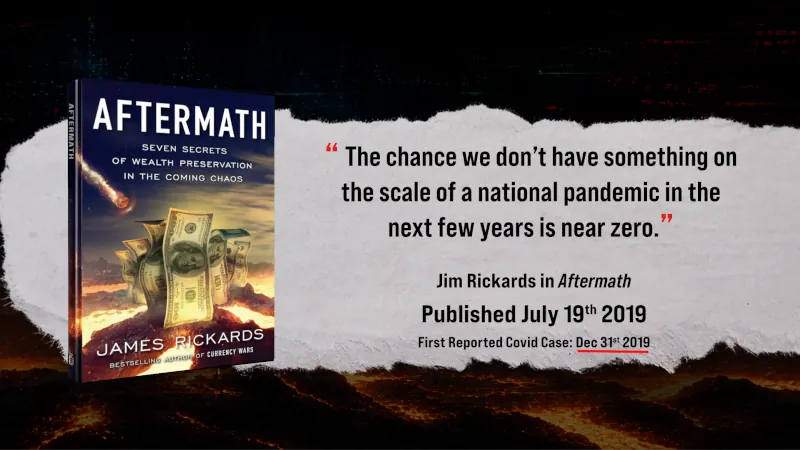
Writing that there was 100% certainty that something on the scale of a global pandemic would happen in the next three years.
That thesis was published four months before the first reported case.
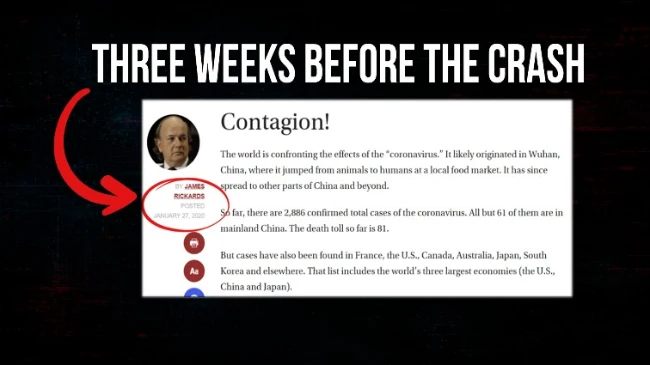
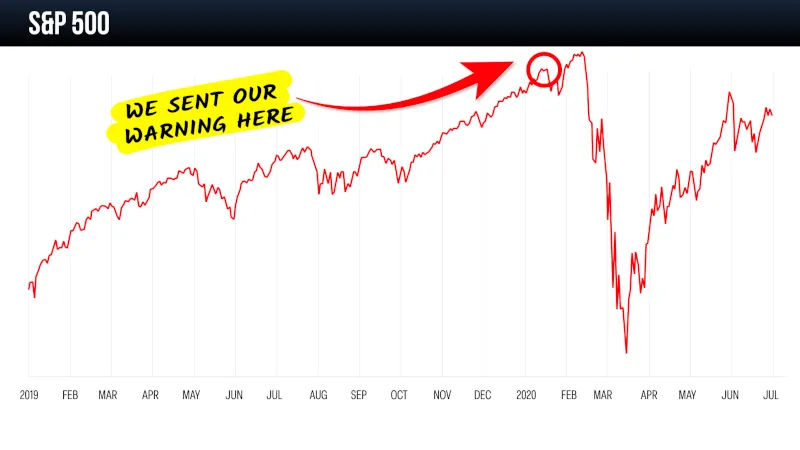
We even warned our readers about the impending sell-off in stocks three weeks before the Covid Crash began.
To my knowledge, no other research firm can make that claim.
But that’s not why I recorded this video.
I reference our past success and experience predicting these crises because we believe there is an even bigger crisis unfolding in America right now.
And this new crisis is so tectonic in nature, it could be the iceberg waiting in the darkness for the U.S. economy.
To put it bluntly:
We believe as soon as August 26th at 6:30 PM the U.S. stock market will suffer a major, major collapse – and it will start with the massive bubble forming in AI.
In fact, according to our best estimates, this coming collapse will be more devastating than the 2008 financial crisis…the COVID crash…or even the dotcom collapse combined.
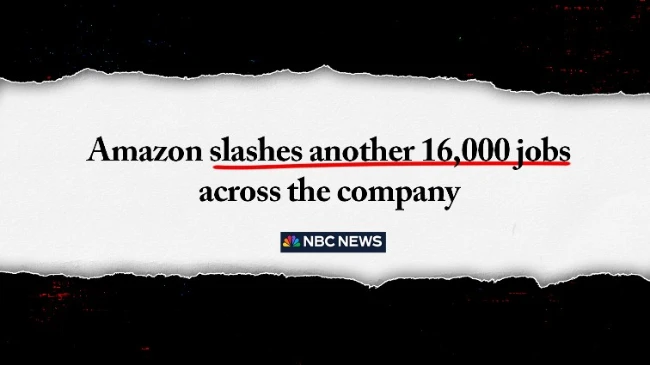
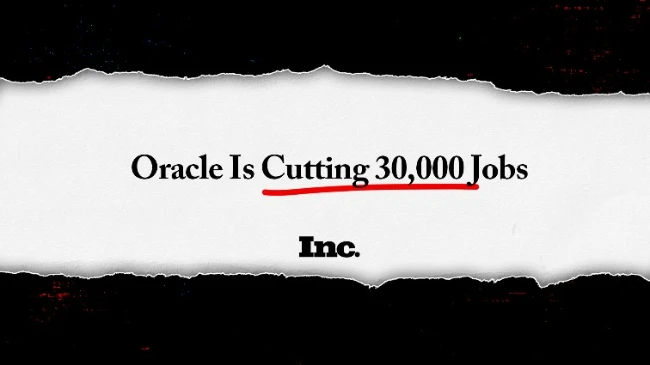
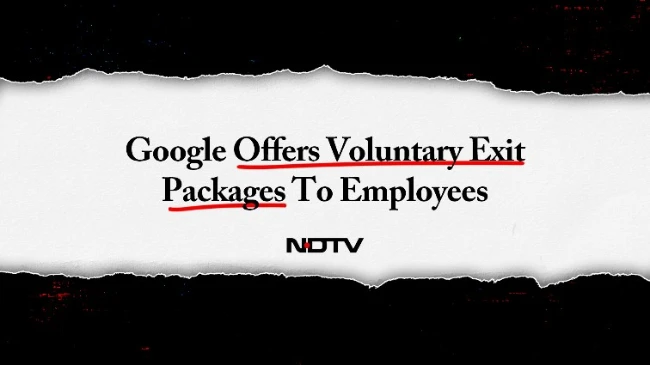
My guess is that the thousands of job losses we are already beginning to see at companies like Amazon, Oracle and Google…
…could accelerate to tens of thousands or even hundreds of thousands of job losses, virtually overnight.
And the ensuing multi-trillion-dollar stock market meltdown will catch millions of Americans off guard… torching their stock portfolios, their retirement accounts and even their personal savings faster than any crisis we’ve seen before.
The market could fall by as much as 80%.
And the U.S. economy – and maybe even our entire way of life as a nation – may never look the same again.
Now, I don’t make this prediction lightly. I’m a patriot and I want to see America win.
But I’m not an economic ‘Pollyanna’ either.
I recognize that there are deep systemic problems in this country – some of which aren’t easy to solve – not without a lot of pain.
Since you’ve already watched this far, my guess is you recognize this too.
And as I’m going to show you, the AI bubble is sitting at the center of it all.
A single detonating event that could bring the entire system down virtually overnight.
But before I go any further I want to warn you.
Some of what I’m going to say will be controversial.
It’s going to challenge some of your preconceived beliefs about this technology…about how the U.S. financial system really works…and it may even change what you think the future of our nation looks like.
I know that may sound unbelievable to you now.
But I’m asking you to hear me out, if only for a few minutes.
Because whether you realize it or not, you ARE invested in this system.
The problem with the AI bubble – and the system that underpins it – is now too big for you not to be.
Remember, in 2008, even people who had never heard the term subprime mortgages had their portfolios decimated and their lives changed forever.
And as you’ll see, that’s the exact situation I see playing out here.
But in my view, good economic analysis isn’t just about considering the most frightening scenario possible – nor is it about burying your head in the sand and hoping for the best.
Instead, it’s about examining the facts and following them to their most logical conclusion.
That’s why I’m going to lay out all my points here, and you can decide if I’m full of hot air.
I did the same thing before the 2008 financial crisis.
In fact, in 2006, a full two years before the subprime meltdown began…
I sent a warning to intelligence officials in Washington about a looming financial crisis.
My full thesis was so in depth that the CIA circulated it among its senior staff.
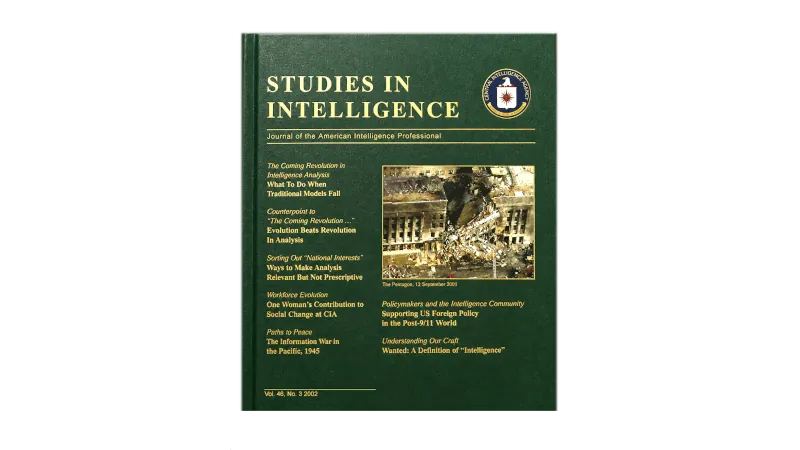
And it appeared in the CIA’s official journal, Studies in Intelligence.
That material remains classified to this day.
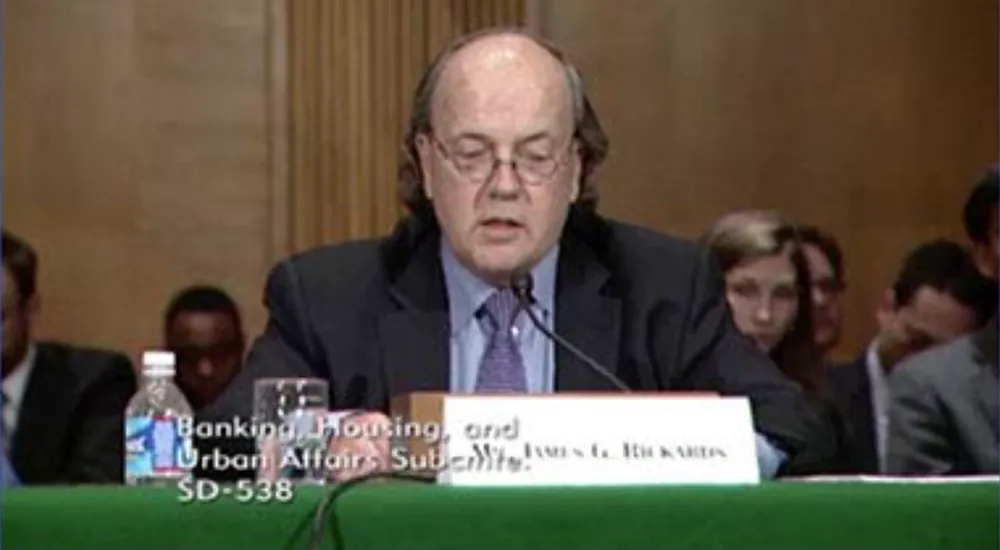
Then in 2007, I testified before Congress and shared what I could of my warning with officials from the U.S. Treasury Department.
I even supplied them with a plan to avert the crisis called “Proposal to Obtain and Manage Information in Response to a Capital Markets Crisis.”
But Washington still failed to heed my warning.
Three weeks later, Lehman Brothers collapsed, leading to one of the biggest financial crises of our lifetimes.
I wish they had listened to me then, but my hope is you’ll listen to me now.
Because during the Lehman Brothers collapse, members of my investment research team not only helped protect subscribers’ portfolios…
But by suggesting a few simple moves, they led them to gains as high as 468% as banks across the country fell during 2008.
And that brings me to today…because this is a far bigger crisis than any I – or my team – have warned about before.
Because as you’re about to see, it’s not just coming…It’s already here.
And August 26th is the date the final domino could drop…
Bringing the entire U.S. financial system to its knees.
That’s why I’ll walk you through what’s about to happen, why I’m certain that this crisis IS here and why this will be an economic disaster on an unprecedented scale…
You can decide for yourself if my analysis is correct.
Of course, the most important part of this crisis isn’t how it will happen or why. It’s what you can do about it.
That’s why I’m going to show you exactly what I’m doing personally to protect and even grow my wealth as this all plays out.
Including details on where I’ve invested over a million dollars of my own money in preparation for this kind of crisis.
I’ll even detail five little-known strategies for navigating this crisis that could protect your portfolio – and even provide enormous returns in the process.
Things like:
Remember, it’s very rare that the average investor has the chance to bet against a crisis this big.
But my team and I have led our readers through some of the biggest crises of the last few decades – so we know exactly what to do.
In short, I’ll make sure you’ll have everything you need to thrive if this goes the way we believe it will.
But before I get into the specific steps you can take to prepare for this event… let me back up and explain to you in the simplest possible terms what’s happening right now.
Basically, for many years now, to keep the U.S. economy afloat, the U.S. government along with the Federal Reserve have inflated asset bubble after asset bubble.
In the 1990s, Alan Greenspan inflated the dotcom bubble.
When it burst, he cut rates and began inflating what would become the subprime housing bubble.
When that began to unravel, Ben Bernanke - a man I’ve had personal conversations with - started QE (Quantitative Easing) which began the broad bubble in U.S. assets we see today.
Each time these bubbles have increased in both size and scale.
But none of these bubbles are as big or as potentially devastating as what’s happening with artificial intelligence.
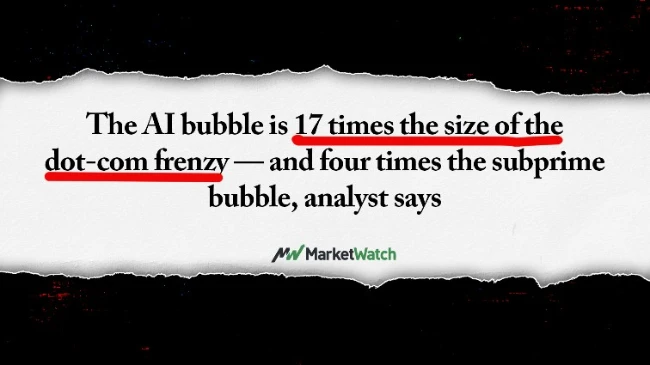
In fact, it’s estimated that the AI bubble is now 17 times larger than the dotcom bubble.
Which makes it several orders of magnitude bigger than the subprime bubble.
And in pure dollar terms, it’s easily bigger than every other bubble put together.
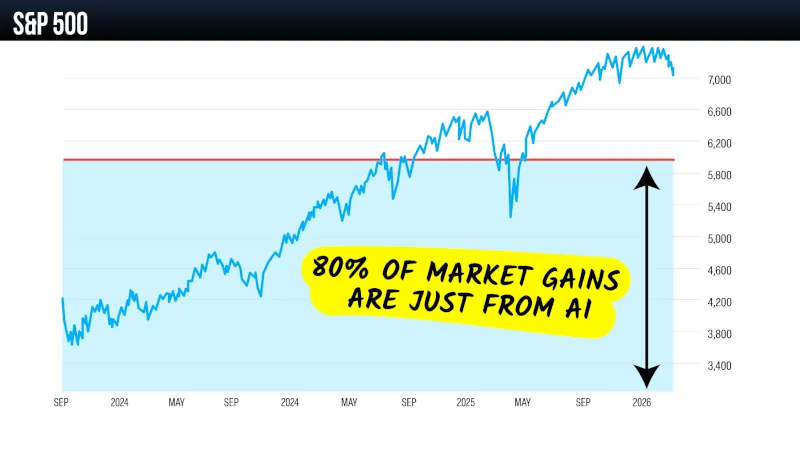
Now, you may think things can’t be THAT bad – AI is an important technology after all and I agree it will be – but consider this simple fact from the Chair of Investment Strategy at JP Morgan:
That’s right!
Almost all of the market gains from the so-called “bull run” in stocks over the last few years are entirely attributable to just AI-related stocks.
Without them, the S&P 500 would only be worth a little over half what it is now.
And not just markets. It’s the economy too.
AI expenditures accounted for 92% of GDP growth… That’s right, 92%!
AI-related spending now contributes more to the nation’s GDP growth than all consumer spending combined…
And Nvidia, the designer of the advanced computer chip at the heart of the AI boom, recently became the first company in history to be worth $5 trillion.
For perspective, $5 trillion represents almost 20% of all U.S. GDP – in just a single stock!
Keep in mind, NVIDIA doesn’t have a single factory or plant. Taiwan Semiconductor and other chip manufacturers build all of their chips.
NVIDIA just draws up the designs!
Look, it doesn’t take a Ph.D. in finance to tell you that when a single stock – of a company that doesn’t actually make anything – is worth a quarter of your GDP…and one industry is almost 100% of your GDP growth…you’re in BIG trouble.
But here’s where it goes from bad to worse.
You see, despite their massive valuations, many of these AI companies are burning through cash – and they are doing so at an alarming rate.
For instance, OpenAI – a darling of the pro-AI media – is losing more than a billion dollars a month.
In fact, for every dollar they make they have to spend at least three.
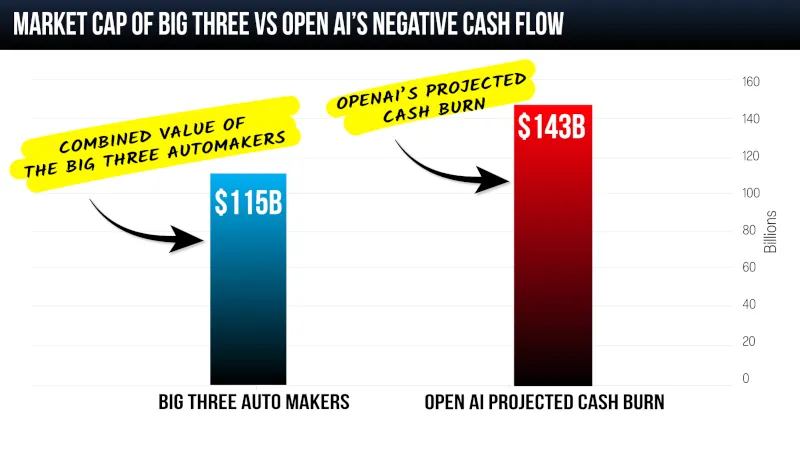
And according to Deutsche Bank, OpenAI will need to accumulate $143 billion in negative cash flow before the company makes a single dollar in profit!
That’s more money than the market cap of the Big Three automakers combined!
As their analyst put it…
But despite the enormous costs…despite the fact their own CEO once said:

I have no idea how we are going to generate revenue
Sam Altman, OpenAI CEO

This company plans to IPO for nearly a trillion dollars this year.
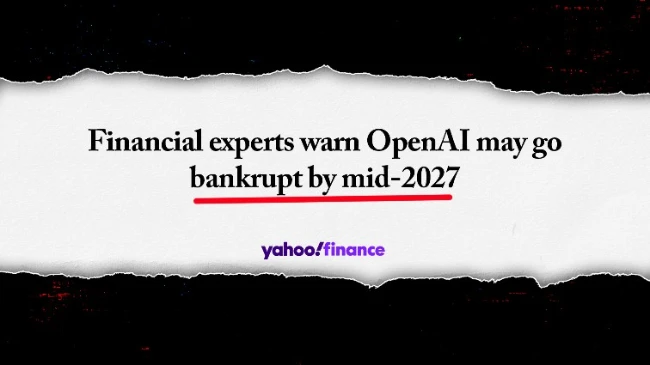
And if they can’t, their entire business might go bankrupt.
Incredible, right?
A company that is burning through cash and has a business model that the CEO himself said he has “no idea how to make profitable”… is set to IPO at one of the highest valuations in history.
And it’s hardly the only absurd example.
For instance:
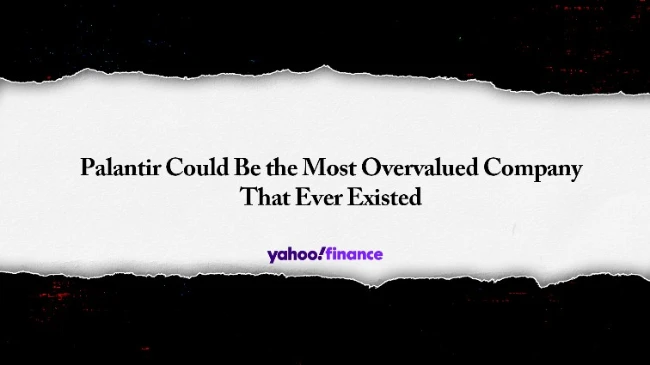
Palantir has a P/E ratio of 222. Which means that if you bought this stock today it would take 222 years at its current earnings to make your money back!
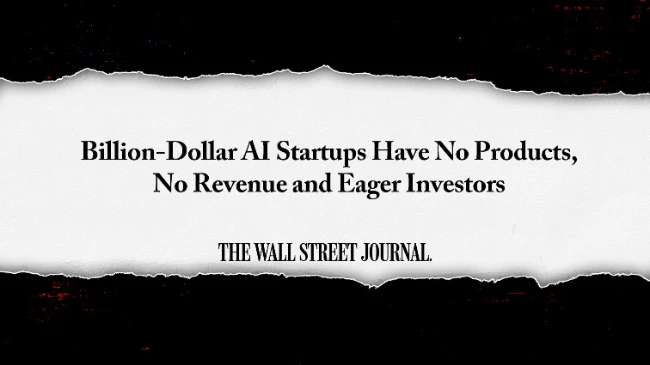
We have AI startups with no products and no revenue that are supposedly “worth” a billion dollars.
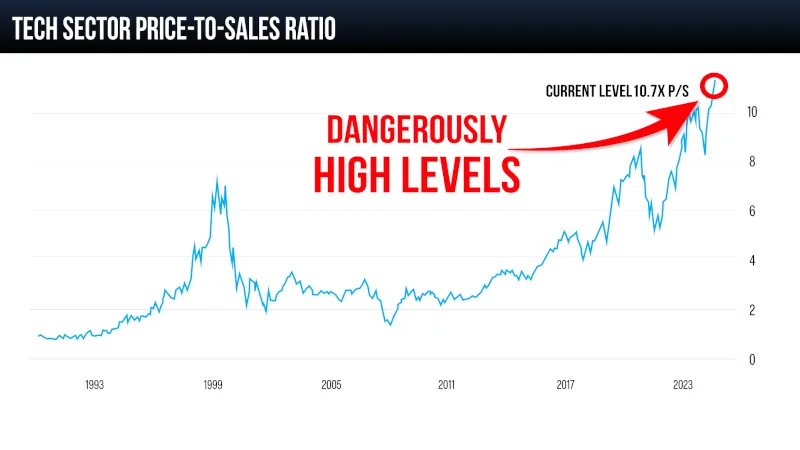
Tech-sector valuations are now well above dotcom era levels.
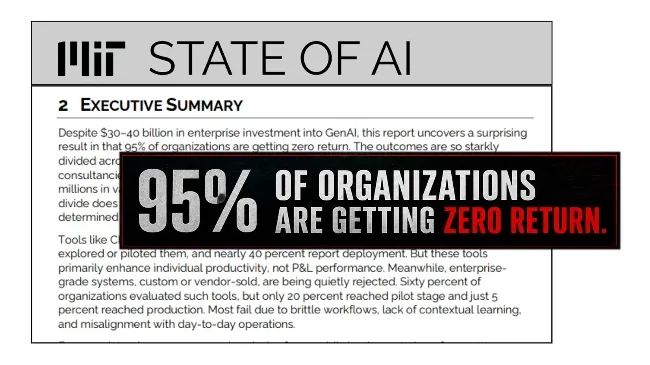
And according to MIT, 95% of corporate AI initiatives fail to produce any return on investment!
So it’s no wonder that guys like Jeremy Grantham – a man who once had over $118 billion dollars in assets under management has said:
And when it does, it could be an economic catastrophe unprecedented in the last 97 years.
In fact, former SEC Chairman Gary Gensler has said that the next financial crisis will come from AI.
And as I’m about to show you, this entire thing may only be held together by hype… what some might consider a sophisticated form of accounting fraud… and most importantly, the illusion of demand.
The illusion of demand for their products…for their data centers…and even their stocks.
And it’s coming to a head much sooner than most people think.
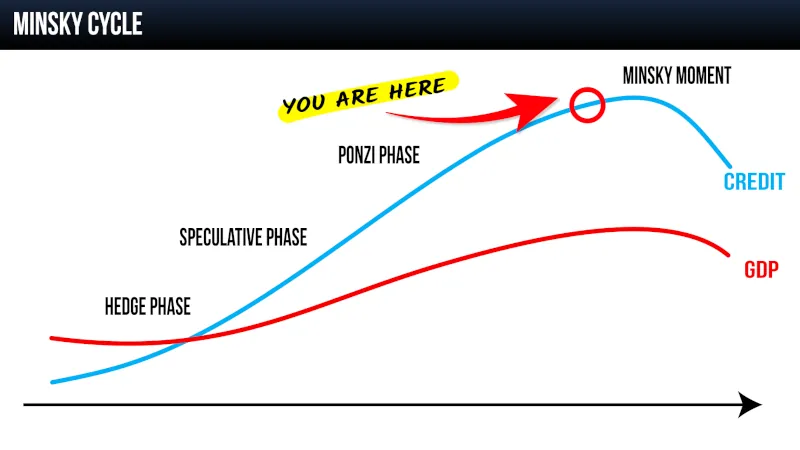
You see, my team and I believe that very soon, the market will experience something known as a Minsky Moment.
It’s named after Hyman Minsky, the Harvard Ph.D. economist who discovered it.
It’s the culmination of a series of financial events that have preceded the biggest market collapses in history.
And it always plays out the same way.
First, it starts with a hedge finance phase where companies only take on debt they can comfortably repay from cash flows.
Then, as the hype builds, they move toward the speculative phase where companies take on more and more debt – at a rate that outpaces their earnings.
Then they enter the Ponzi phase, where they’ve taken on so much debt, they need new investors just to keep up with debt repayment.
(By the way, the Ponzi phase is the most dangerous phase of all because it often relies on creative accounting or sometimes even outright fraud).
Finally, it all ends in a single culminating event when investors finally catch on and the market suffers a massive massive collapse – this event is called the Minsky Moment.
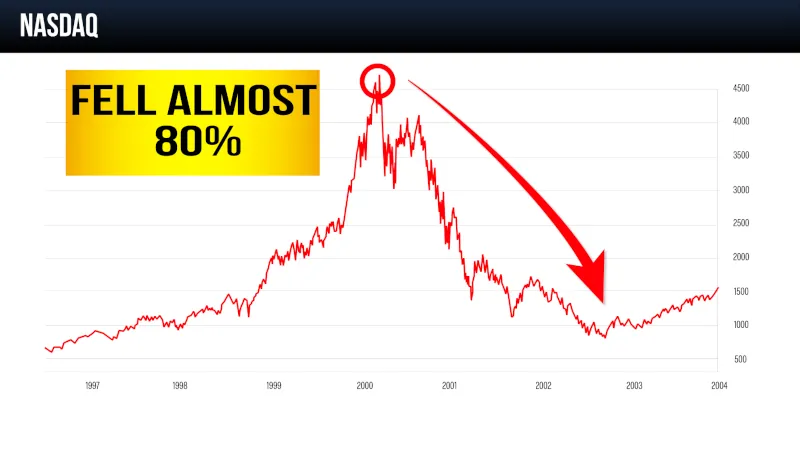
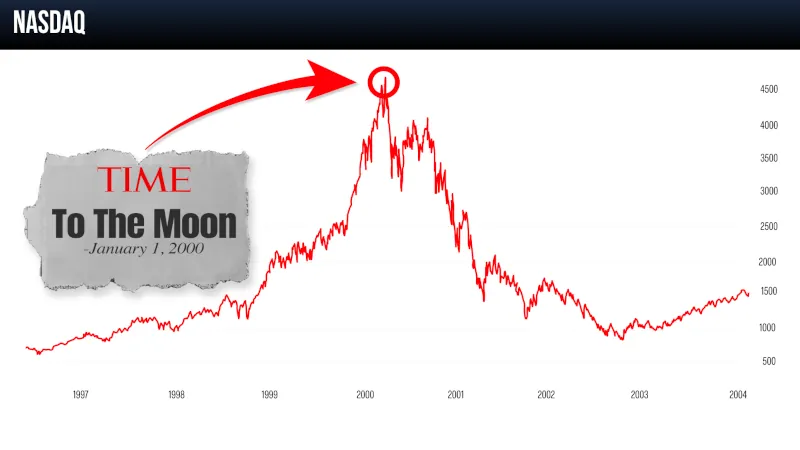
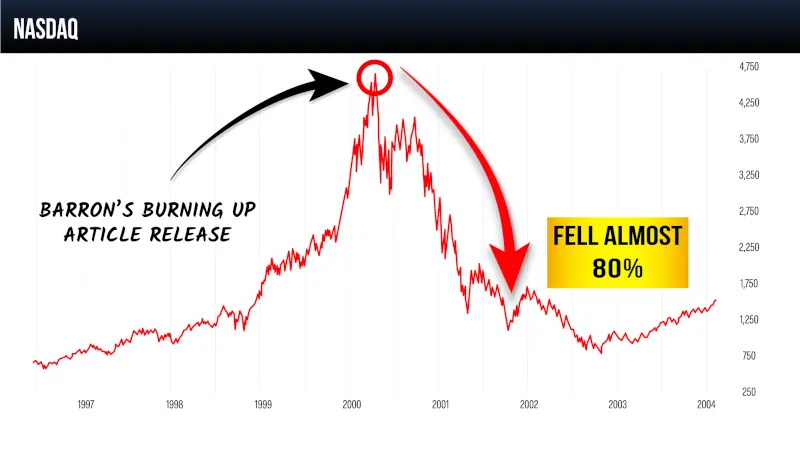
It’s what happened before the dotcom bubble burst in 2000.
When the Nasdaq plummeted almost 80%.
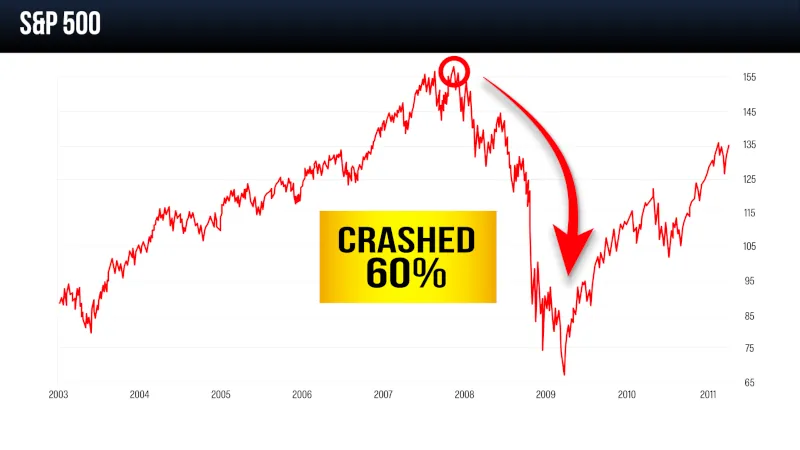
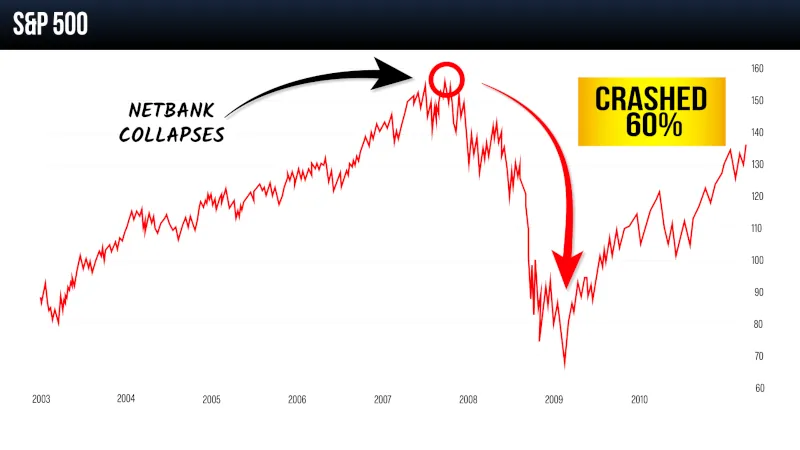
It’s what happened before the 2008 financial crisis.
When the market fell close to 60% and millions of people watched their retirement accounts go up in flames.
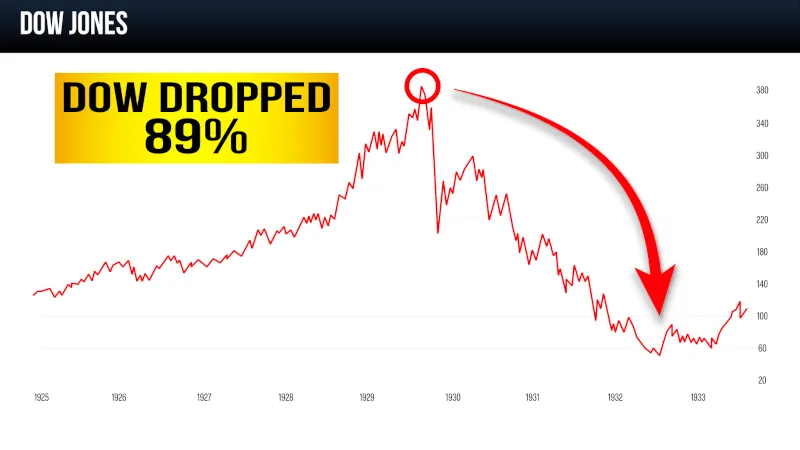
It’s what happened just before the Great Depression of 1929.
And it’s exactly what’s happening in AI now…only on a much bigger scale.
In fact my team has pinpointed a new date — August 26th.
That’s the exact date we could see a new Minsky Moment for AI.
And it’s the exact date this entire bubble comes to a head.
I know that may sound unbelievable now.
But don’t take my word for it. Let me show you what I mean.
You see, you may think that this time it’s different.
You may think we are living in a “new paradigm” and this technology is going to change the world.
And you are exactly right. This technology is important.
It will change the world.
But that doesn’t mean it’s not a bubble.
Look at what happened during the internet boom in the 1990s.
At the time, the internet was an exciting new technology set to change the world.
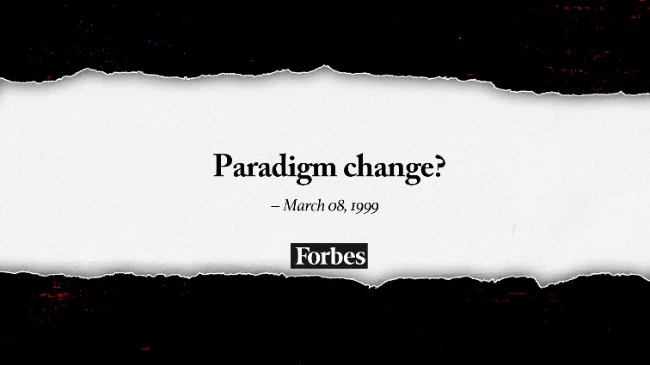
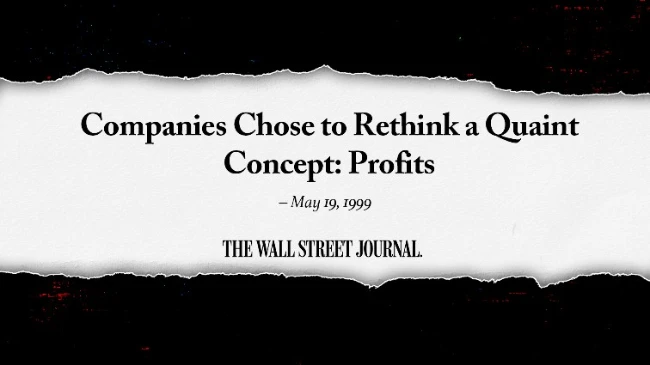
People were saying things like this was a new investing paradigm.
And that profits were “quaint artifacts of an outdated era.”
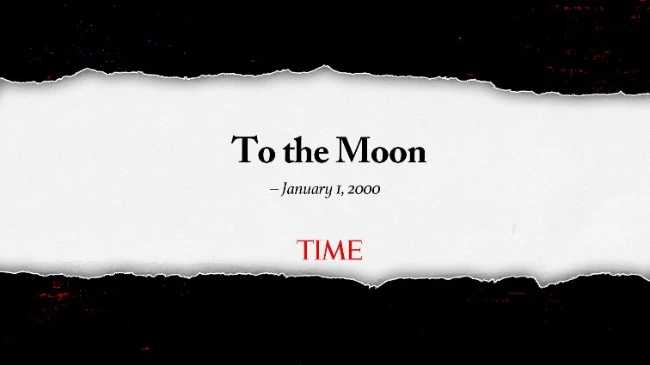
And almost near the exact peak of the bubble, Time Magazine was still saying that somehow all of these stocks would still go “to the moon”…
Time Magazine made its “to the moon” prediction right here.
Right when a company could add a “.com” to its name, the stock would get a boost.
This, of course, was despite a lack of profit…
Despite the fact they already had sky-high valuations and P/E ratios…
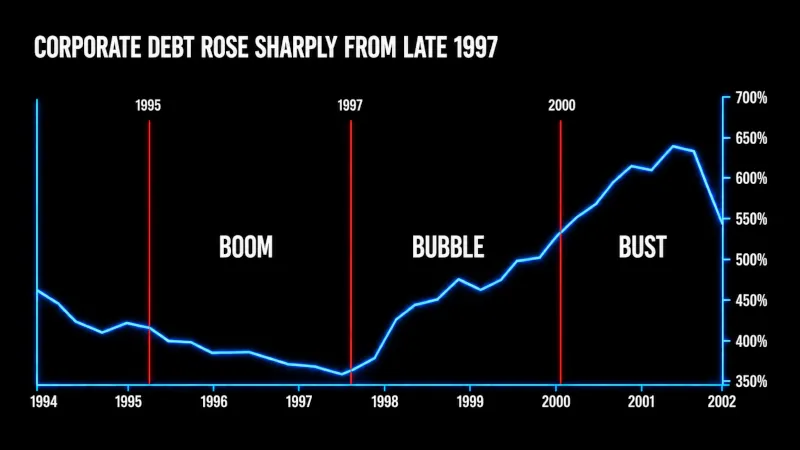
And despite the fact these small companies kept taking on more and more debt to finance so-called “growth”.
In fact, internet companies spent nearly half a trillion dollars on infrastructure – nearly a trillion dollars in today’s money.
They installed 80 million miles of fiber optic cable across America – enough to circumscribe the globe over 3,200 times.
Sounds a little bit like today, right?
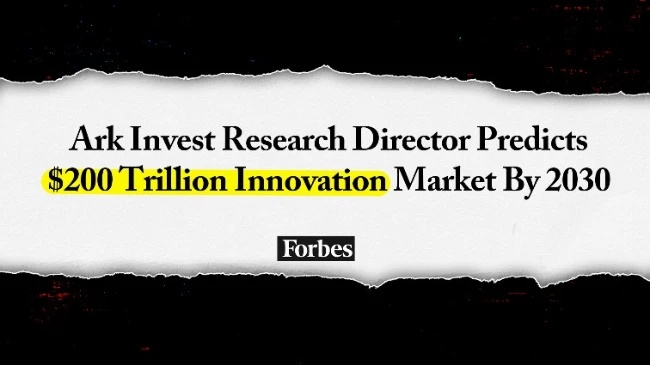
You have speculative tech funds saying things like AI will add $200 trillion to the global economy – which by the way, is nearly double the size of the entire global economy – in less than five years…
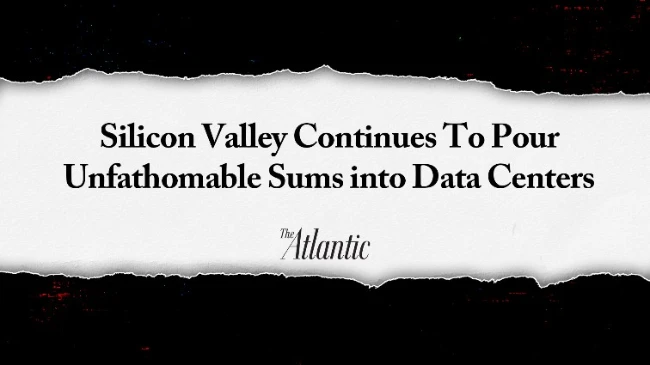
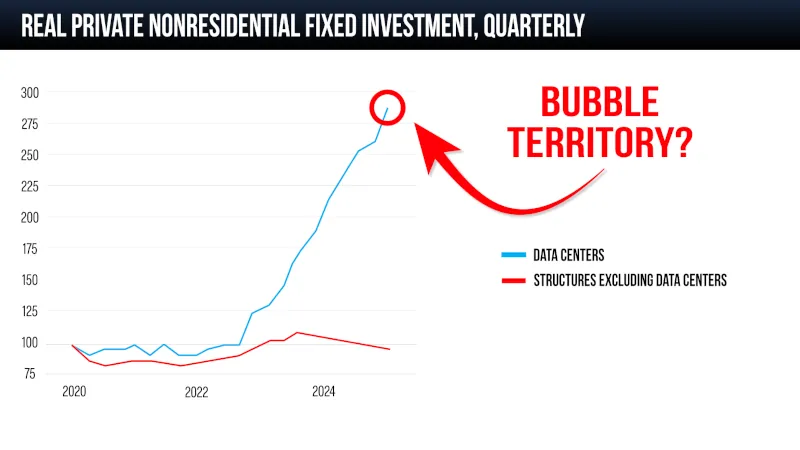
The tech companies are pouring unfathomable amounts of money into data centers…
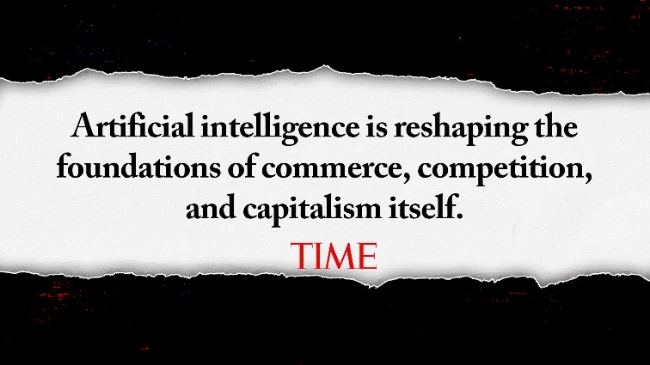
And Time Magazine is saying, once again, that AI is a new paradigm redefining the entire concept of business and capitalism itself…
And – much like AI today – the biggest part of the internet bubble was infrastructure spend.
The build out cost of laying fiber was astronomical, totaling billions upon billions.
Which of course internet companies funded with tons of debt…
Debt they couldn’t repay – because they weren’t making any money.
Eventually 85% of these fiber optic cables would go unused.
Sound familiar?
The point is, during the internet bubble in 1999…
Despite the fact stocks were surging…
Despite the fact billions were being invested in internet infrastructure…
Despite the fact the media was proclaiming this a new investing paradigm…
Underneath the hype, internet companies were going broke.
They needed to sell stock or take on new debt just to stay afloat.
In other words, we were in this stage of the bubble.
And people began to figure this out.
That’s when the Minsky Moment began.
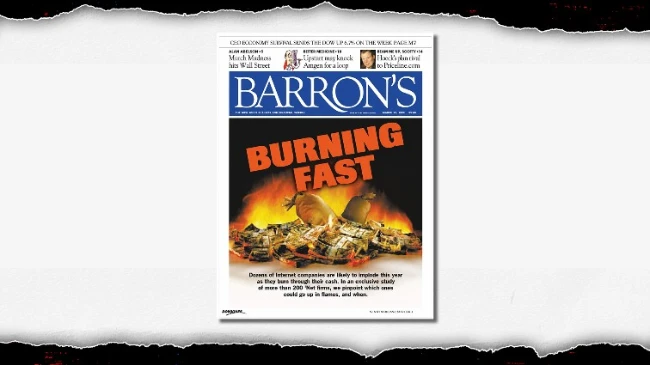
On March 20th of 2000, Barron’s magazine published an article titled “Burning Up.”
It warned that in the next 12 months, at least 50 dotcom companies would run out of money.
Within the week, a few earnings misses proved Barron’s was exactly right.
Stocks began to crater.
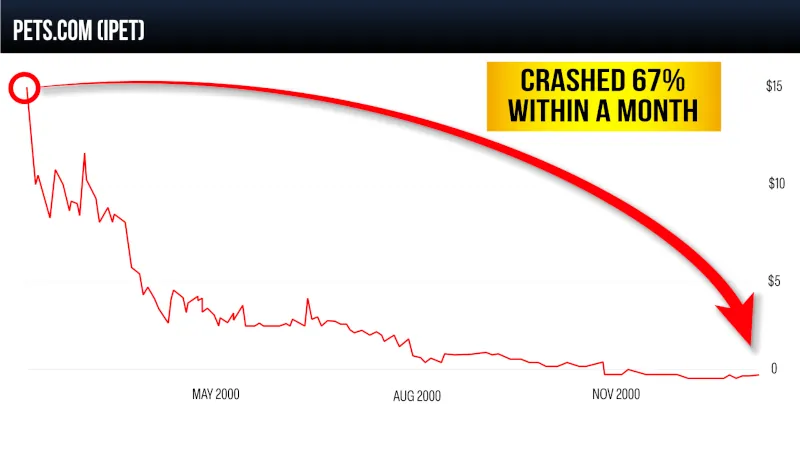
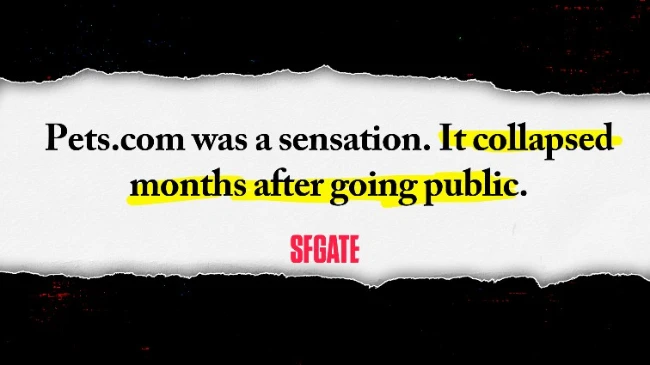
Companies like Pets.com which had a massive IPO just ONE month before the article was released, plummeted 67% within a month.
Nine months later, the company was bankrupt.
EToys.com, which had a highly successful IPO reaching $77 a share, completely reversed course.
By early 2001, shares were down to $1 – and the company filed for bankruptcy.
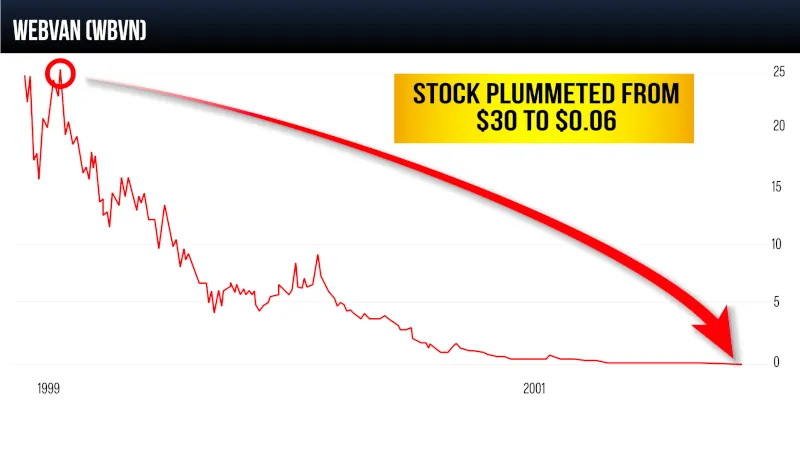
Webvan, which hit $30 a share after going public…
Saw its stock had plummeted to $0.06 per share.
Incredible, isn’t it?
Almost the exact day Barron’s published their article and the Minsky Moment arrived…
The entire Nasdaq began its most spectacular crash in history.
Eventually crashing nearly 80%…
Many investors lost everything…
Their retirements, their security, their family’s futures…
It didn’t matter if they were invested in dotcom stocks or not.
Because the entire market crashed and didn’t recover for 15 years.
And whether most people realize it or not…
This is the exact situation playing out with AI today.
Not only are AI companies burning through cash – they are doing so at a mind-boggling rate.
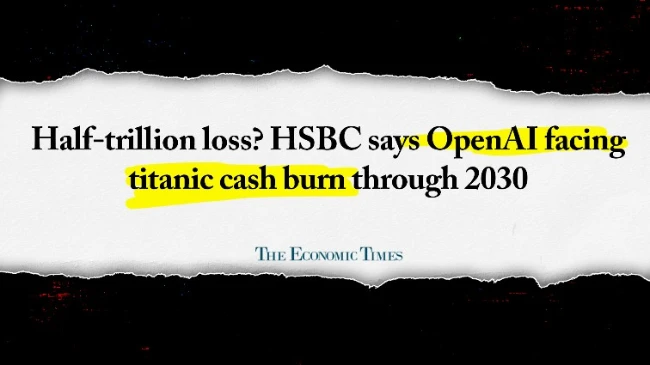
According to The Economic Times, OpenAI is facing a trillion-dollar loss over the next few years.
And according to HSBC, that’s even if the company can almost 10X their revenue by then.
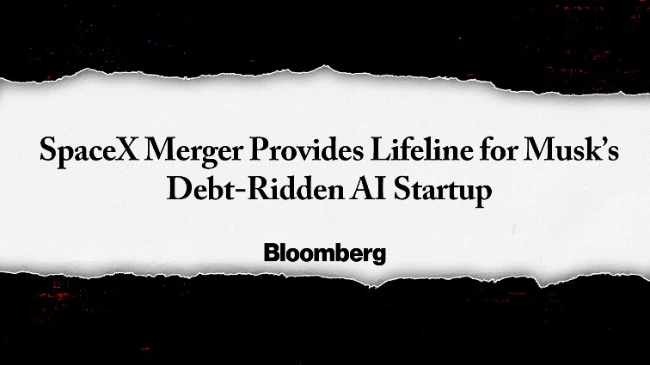
Elon Musk’s xAI was burning through cash so fast that it had to be merged with SpaceX just to keep the entire thing from going under.
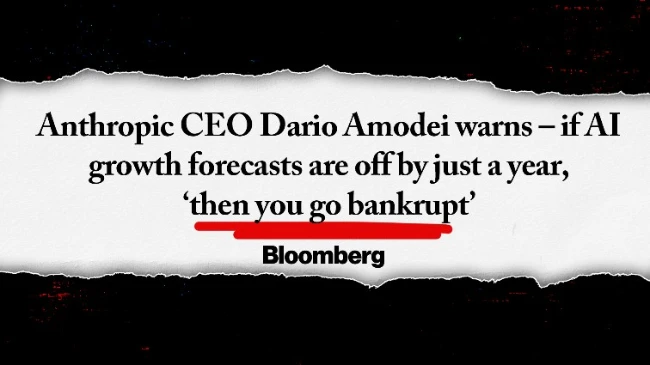
And Anthropic is warning its business could go bankrupt if AI growth forecasts are off by a year.
Imagine investing in a company that could go bankrupt if the projections are off by one year.
But despite that simple fact… investors are piling into AI stocks.
Just look at the S&P…
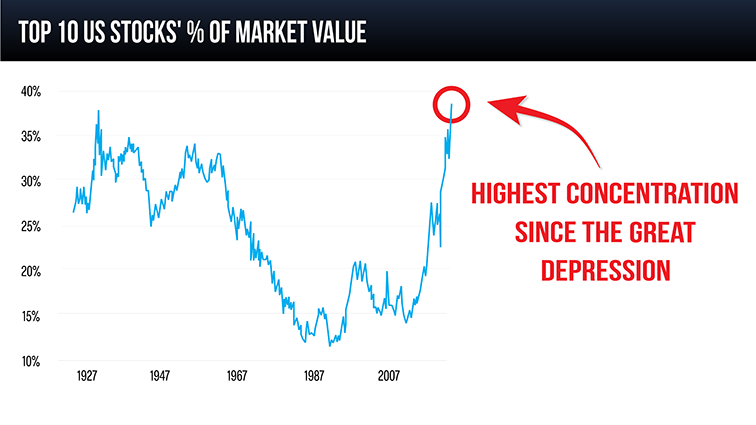
It’s reached its highest concentration since just before the Great Depression…
With most of our nation’s wealth sitting in just ten stocks.
And eight out of these 10 stocks are soaring, based almost solely on the hype surrounding AI.
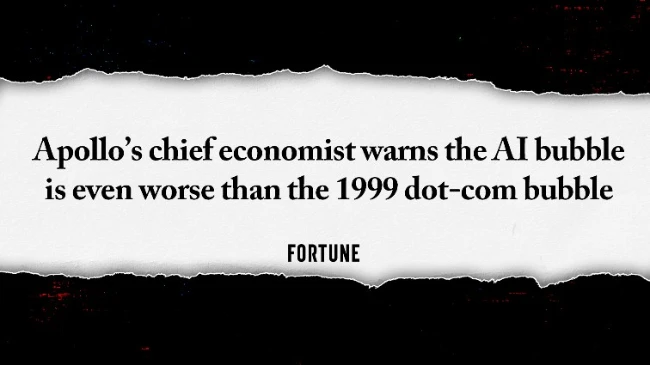
Torsten Slok – the chief economist at Apollo Asset management – which manages nearly a trillion dollars in assets has said:
The top 10 companies in the S&P 500 today are more overvalued than they were in the 1990s.
Torsten Slok, Chief Economist
Apollo Asset Management
And that we are in a much worse position than 1999.
Which means if the big AI bet doesn’t pay off soon – the whole system could go down.
Like I said, we are right here.
And if you think I’m exaggerating…if you still think that things can’t be THAT bad…
Let me introduce you to something called “subprime AI”.
You see, one of the clearest signals we’re in the Ponzi Stage of a bubble – just before the Minsky Moment begins – is the way the market begins to manage the massive amount of debt.
Just take a look at what happened during the 2008 financial crisis.
This is an example of how a Minsky Moment plays out in the real world.
You see, for years lending standards had been dropping.
By 2006, the debt market found itself full of potentially toxic subprime mortgage loans.
Wall Street knew that without a way to sell these undesirable mortgages the housing bubble would end.
So their bright idea?
To keep the debt-financing going, they decided to take bad loans and package them with good loans – in order to “spread the risk around.”
These were split into “tranches” and repackaged as AA or AAA rated bonds that paid enormous returns, sometimes as high as 15%!
Which made them irresistible to pension and fund managers.
So much so that in now released confidential testimony, James Rokakis, the County Treasurer in charge of Cleveland said he thought:
Of course, it was only later he realized that these CDOs were what took the country’s finances and in his words “shoved them over the edge of the cliff.”
In short, this new financial debt instrument spread the risk around alright – it spread it to your retirement accounts, your banks and your pension funds.
Instead of keeping the toxic debt on their own books, Wall Street shifted it to yours.
Without your permission, they put your finances on the line.
Of course, this all worked out well until it didn’t.
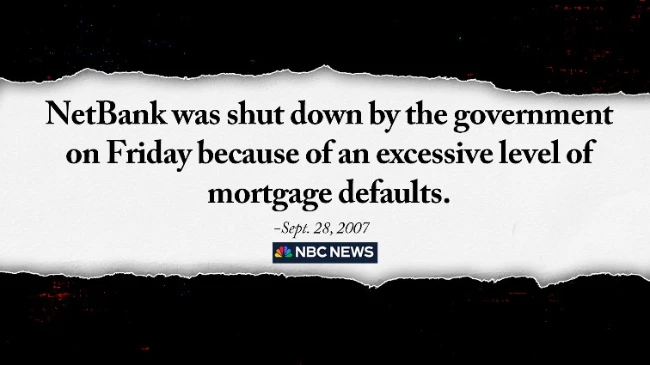
On September 28, 2007 the first of the subprime mortgages started going bad.
This caused NetBank to collapse…
This was the Minsky Moment for America’s subprime mortgage market.
Because like a series of dominos, other banks began to fall with it.
And it cascaded into a crisis so big it was within hours of taking the whole system down.
If we don’t do this [bailout] , we won’t have an economy on Monday…This could be the worst financial crisis in global history, including the Great Depression.
Federal Reserve Chair Ben Bernanke
to Congress during the 2008 financial crisis
The market crashed…
The job losses mounted…
And caused financial devastation for anyone who was trying to retire near that time.
Now you may think we’d never repeat those mistakes…
You may think we’d never resort to subprime loans or CDO schemes again.
But believe it or not, that’s exactly what we are doing with AI.
You see, in order to make AI work, companies have to spend trillions of dollars on data centers.
And just like the millions of miles of fiber optic cable that were laid before the dotcom bubble imploded – this is being pitched as “building out the infrastructure of AI.”
Which means that AI is as much a real estate problem as it is a technological one.
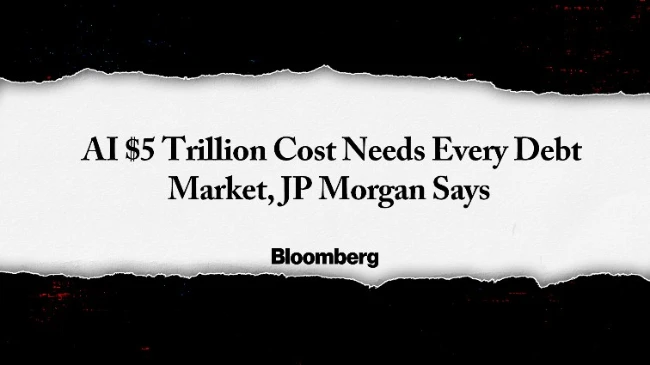
In fact, it’s estimated that nearly $5 trillion will be spent on data centers in just the U.S. alone.
But with AI companies already burning cash, where will the money come from?
You guessed it… massive amounts of debt.
Potentially toxic debt that Wall Street doesn’t want on its books.
So, once again, they’ve found a way to unload the risk to you.
You see, they’ve structured these data centers deals as glorified real estate loans.
Basically, private equity funds the data center then charges AI companies rent.
As Charlie Warzel of The Atlantic put it:
Private-equity firms put up or raise the money to build a data center, which a tech company will repay through rent.
Multiple data-center leases can be combined into a security – a bond in essence, and sorted into what are called “tranches” based on their risk of default.
If this sounds familiar, it’s because not two decades ago, the Great Recession was precipitated by banks packaging risky mortgages into tranches of securities that were falsely marketed as high-quality.
By 2008, the house of cards had collapsed.
Charlie Warzel, The Atlantic
Incredible, right?!
In order to sell the debt to finance their risky data center builds, they’re following the CDO blueprint!
And remember…
These loans are essentially backed by an industry that produces NO profits!
That’s why tech journalist Ed Zitron refers to it as “subprime AI.”
Because it’s the equivalent of giving “no income, no asset loans” to subprime borrowers in 2008.
And just like subprime mortgages financed the housing bubble in 2008…
This “Subprime AI” debt is financing an enormous data center bubble.
And just like 2008…
This debt is being bought by pension and retirement funds around the world!
In fact, analysts at JP Morgan are saying that fund and pension managers are buying so many that:
That means, just like subprime mortgages in 2008…
These new “data center bonds” are filling your pension funds, your retirement account and your 401(k)s.
And it’s blowing this bubble up on a tectonic scale.
In fact, David Dayen, the executive editor at The American Prospect said it like this:
And Oliver Wyman, one of the highest rated financial consulting firms in the country, issued an even more dire warning, saying that:
In 2008, banks discovered they owned far more US housing risk than their internal reports suggested. They might soon discover the same about data-center and digital infrastructure risk…
The consequences of an AI-led market collapse would be severe. At today’s valuations, an equity crash like the early 2000s would wipe out approximately $33 trillion of value — more than US GDP.
Oliver Wyman
Can you believe that?
One of the best consulting firms in America is now warning we could see a market crash greater than the size of U.S. GDP!
I know it almost sounds laughable.
How can we so easily repeat the mistakes of the past?
But that’s exactly what’s happening.
And it’s creating the conditions for one of the biggest financial crises of our lifetimes.
One that could be trillions upon trillions of dollars in scale.
That’s why it’s so important that you take the steps that I’m going to recommend today.
Because whether you’re directly invested in AI companies or not…
Once the Minsky Moment for AI hits …
Your wealth, your retirement accounts and even your financial way of life are all at stake.
And it could happen as soon as August 26th.
I’m going to cover a few simple steps you can take to protect yourself in a moment.
Including how to check your portfolio, retirement account or pension fund for these toxic data center bonds.
And the No. 1 place I recommend you put your money instead.
But first, let me show you the big fraud at the center of AI.
You see, this bubble is so much bigger than companies burning through cash…
Or even the data center CDOs.
Because at the heart of this bubble is a magic trick.
A financial sleight of hand that allows AI companies to effectively move money from their left pocket to their right.
In short, it has allowed them to create the “illusion of demand”.
And it’s the same “trick” that’s been used to prop up bubbles before.
Take Lucent Technologies for instance.
It was a telecom company during the 90’s and it hatched a brilliant revenue scheme.
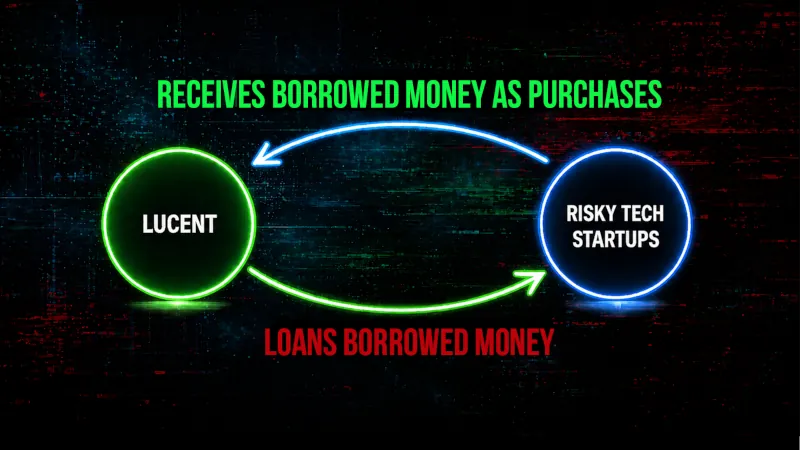
Lucent aggressively lent billions to cash-strapped customers—often speculative telecom startups or new companies building out networks.
Those loans enabled customers to purchase Lucent’s expensive equipment.
Lucent would book the full sale as revenue upfront on its income statement.
Though the "payment" was essentially Lucent’s own loaned money!
They were effectively moving money from their left pocket to their right and calling it revenue.
They were creating the illusion of demand.
And here’s the real magic…
The more money Lucent borrowed, the more they could loan out to start-ups. The more they loaned out, the more they got back in revenue, so the more they could borrow. A feedback loop that cooked their books.
This is known as circular financing.
And it took Lucent from a small spin-off…
To the largest telecom company in the world!
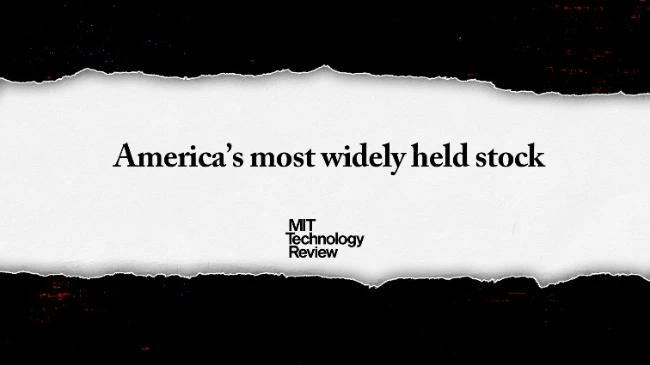
In fact, it had almost 5 million shareholders.
And was the most widely held stock in America at the time.
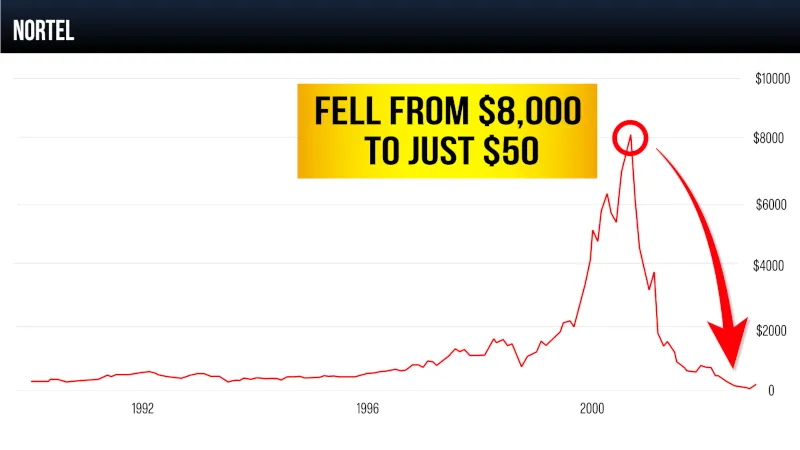
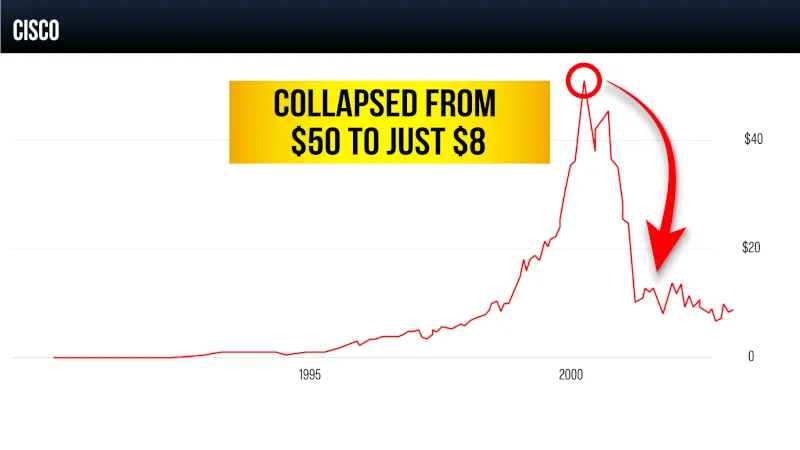
Similar schemes were run at companies like Nortel and Cisco Systems.
Inflating their stock prices on an epic scale.
Of course, once the Minsky Moment for the dotcom bubble hit…
The illusion was up, and each one of these stocks fell through the floor.
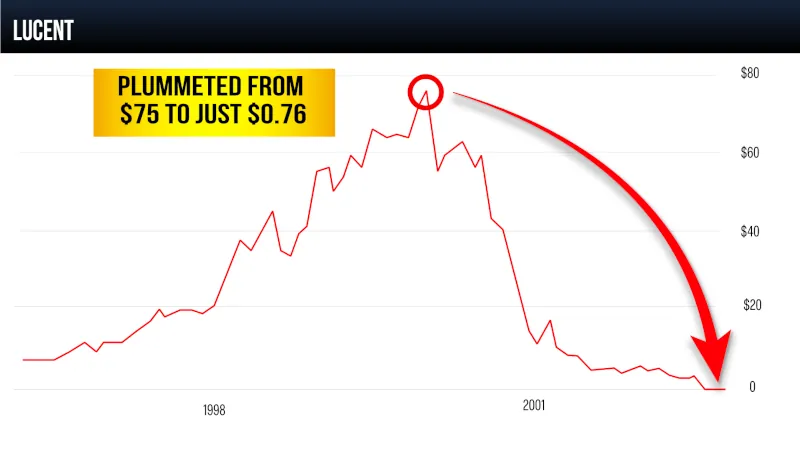
Lucent plummeted from $75 to just $0.76 in just a few short years.
Nortel fell from over $8,000 per share to around 50 bucks.
And Cisco collapsed from $50 to just $8.
And if you look at what’s happening in AI today…
This might be one of the biggest circular financing schemes in history!
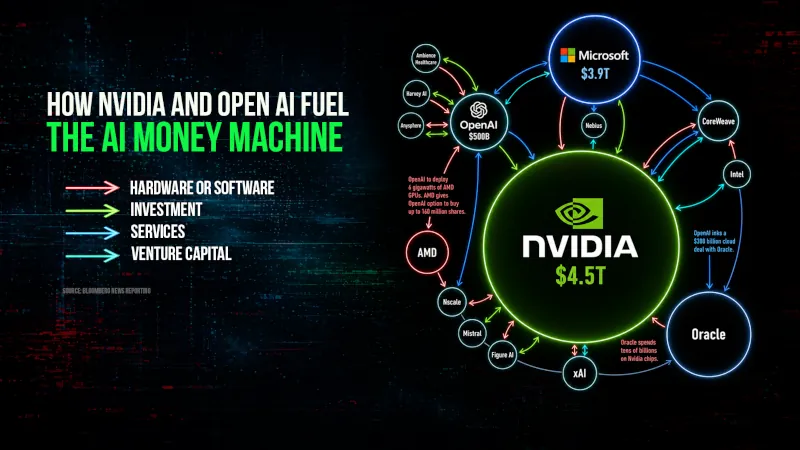
Nvidia is investing money in start-ups which then buy NVDA’s chips. OpenAI invests in Oracle’s data center buildouts which then use the money to invest back in OpenAI. And on and on….
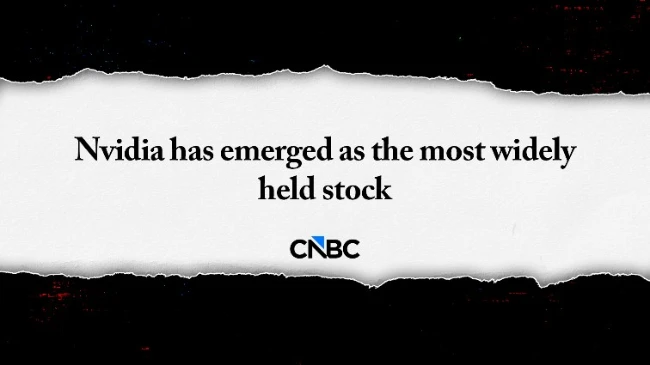
In fact, much like Lucent in the 1990s, Nvidia has become one of America’s most widely held stocks…
And it’s investing so much money in these AI start-ups that it’s being called the “central bank of AI and the lender of last resort”
As Grace Blakeley, author and former Research Fellow at the Institute of Public Policy Research, put it:
“The last time we saw anything like this level of circularity in the tech sector was the dot-com bubble.
The AI infrastructure boom parallels the telecom equipment companies such as Lucent and Nortel that advanced money to customers in the 1990s to buy equipment, only for everyone to go bankrupt later.
This artificial arrangement creates the illusion of stronger demand for both companies’ services…
The big difference this time is scale.
The amounts being pumped into AI infrastructure dwarf the amounts that were spent laying down fiber optic cables.”
Grace Blakely
And it’s not just her.
Michael Burry – the man who predicted and profited from the 2007 subprime mortgage collapse…
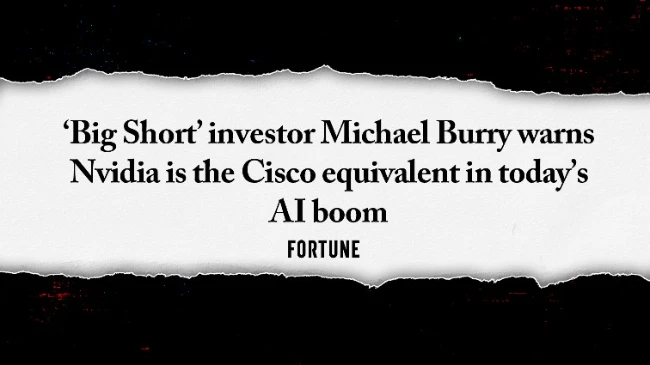
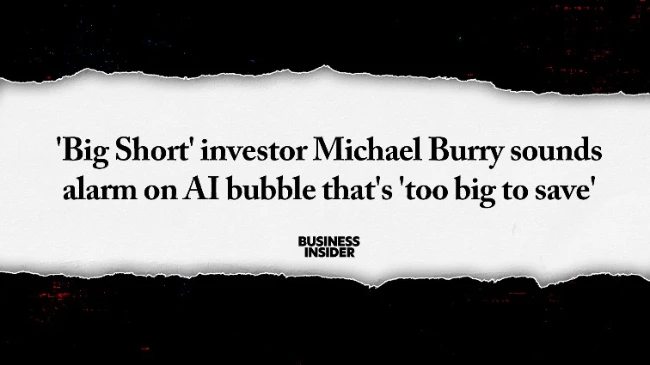
Has called Nvidia the “Cisco of the AI boom”.
And has said this bubble is now “Too Big to Save”.
It’s simply incredible, isn’t it?
The AI industry is such a money pit we’re seeing it take desperate steps like circular financing and dusting off the play book for CDOs to keep the bubble going.
Of course, just like 2008 and the dotcom bubble, these wildly dangerous schemes never work in the long run.
They just set us up for a bigger and bigger collapse.
And this collapse could be the biggest of them all.
You see, when smart money begins to move…
That’s one of the first signs a new “Minsky Moment” is here.
And money is beginning to move out of AI fast.
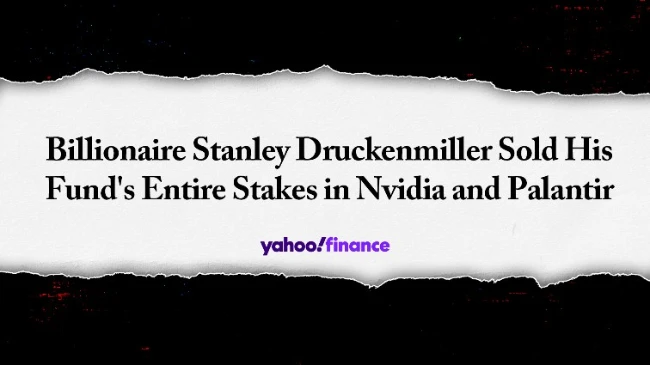
For instance, billionaire Stanley Druckenmiller – who predicted the 2008 financial crisis – has already offloaded all his Nvidia and Palantir shares.
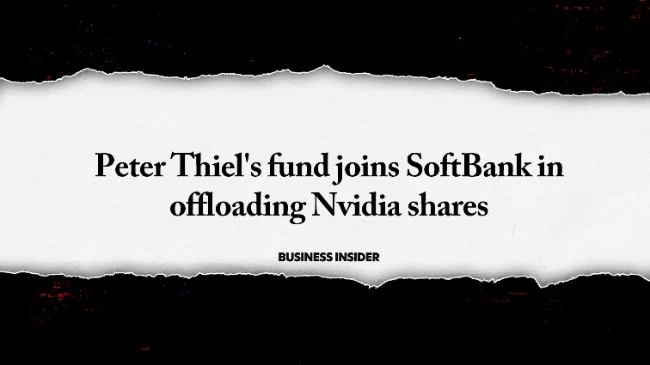
Techno-optimist and venture capitalist Peter Thiel sold off his entire Nvidia stake.
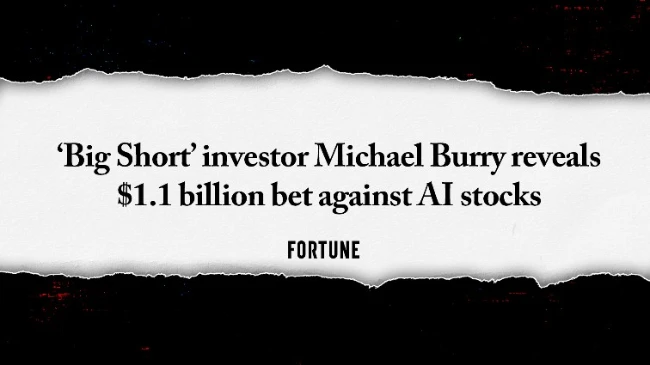
And Big Short investor Michael Burry has made a $1.1 billion bet against AI.
And this isn’t going to be bad for just AI stocks…
It has the potential to bring the whole economy down.
In fact, according to the BBC:
During a panel discussion at Silicon Valley’s Computer History Museum, AI entrepreneur Jerry Kaplan told a packed audience he has lived through four bubbles. And said:
“When the AI bubble breaks, it’s going to be really bad, and not just for people in AI.”
BBC
And he is exactly right.
Paul Tudor Jones has said this “is so much more potentially explosive than 1999.”
Stacy Rasgon, an analyst for Bernstein Research, a global investment firm with $867 billion under management, has said:
And even Sam Altman has said that:
A lot of people are going to lose a phenomenal amount of money.
OpenAI Founder Sam Altman
Like I said, it’s not just me.
Even some of the biggest banks and wealth funds in the world are sounding the alarm.
The chief of the Bank of England has warned that the private credit market is “slicing and dicing and tranching loan structures.”
And that “if you were involved before the 2008 financial crisis, alarm bells should be going off.”
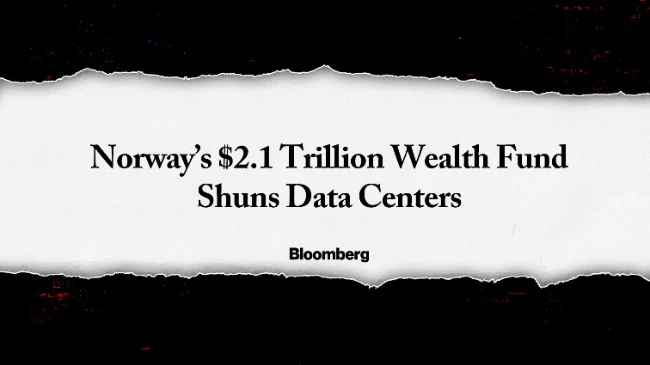
Norway’s $2.1 trillion sovereign wealth fund – one of the biggest and most conservative wealth funds in the world – says it is shunning investments in data centers and AI.
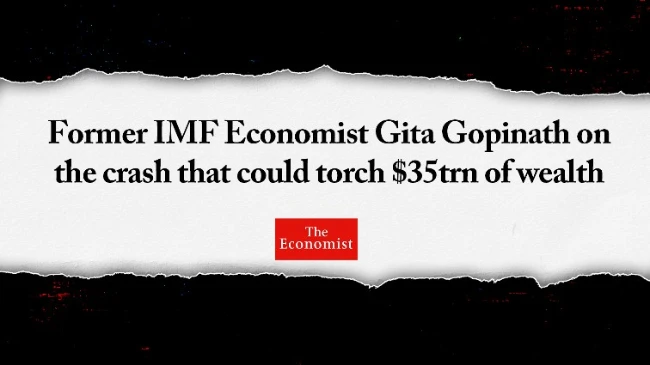
And the former head of the IMF is saying this could turn into a $35 trillion market crash.
You see, at this point, it’s not a matter of “if” this bubble pops…It’s simply a matter of “when”.
Investors, banks and sovereign wealth funds already know there are serious problems with AI.
So they are trimming their positions and betting against it.
In short: They are getting out before the Minsky Moment hits.
They are positioning themselves to profit before the public catches on and the selling starts.
The good news is that’s exactly what I plan to share today with you.
You see, getting ahead of a market crash is how some of the biggest fortunes in history have been built.
Michael Burry made his fortune by betting against subprime CDOs in 2008.
Nassim Taleb – the author of The Black Swan – built his fortune by getting ahead of the 1987 market crash.
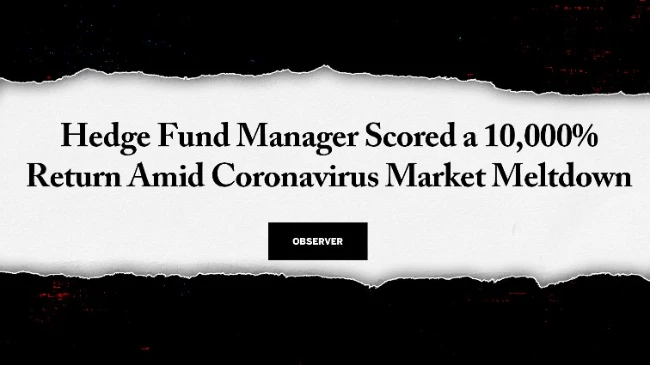
Billionaire Bill Ackman took home a massive 10,000% return in just a few weeks during the Covid Crash.
And even though you might not take home returns as high as these professional traders did…
And all investing comes with risk so never invest more than you can afford to lose…
I’ve found a way for you to essentially do the exact same thing.
All without shorting stocks or leveraging your account.
Which means, this could be your chance to get ahead of a crash and take home a massive return of your own.
One that could generate returns as high as 600% or more over the next 12 months as the market crashes.
I’ll cover the details in just a moment…But first let me explain why I’m all but certain we are about to see a massive collapse in the stock market because of AI.
Despite all the evidence I’ve shown you…
Despite the fact this bubble is already coming apart at the seams…
I know many people and pundits in the news are still in serious denial.
When the Minsky Moment hits, it almost always catches everyone off guard.
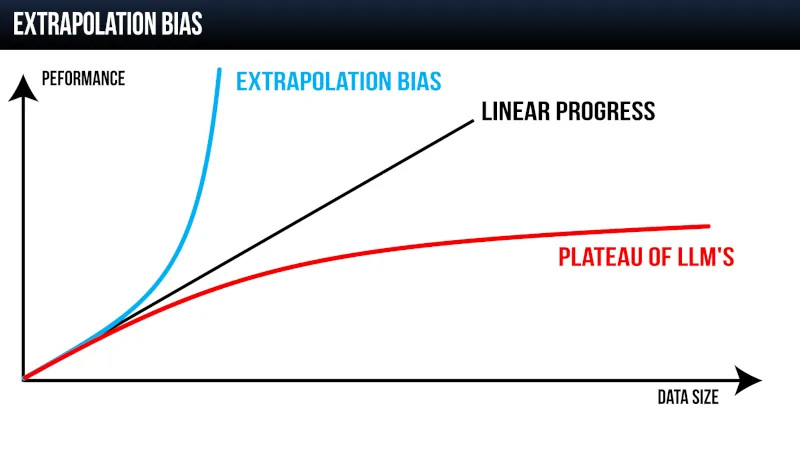
The reason for this is what psychologists call “extrapolation bias”
In short, people believe that because something has happened in the recent past – it’s likely or even inevitable that it’s going to happen in the future.
And it’s what causes people to overestimate technological or financial innovation, whether it’s the internet, subprime CDOs or even the progress of AI.
And it makes even the highest IQ people deny a pending disaster, no matter how obvious the danger may be.
I saw the power of the extrapolation bias firsthand when I negotiated the bailout for Long-Term Capital Management.
You see, like AI and the 2008 financial crisis, this was an investment fund built on a new innovation – a “paradigm shift” in finance we had never seen before.
And just like AI and the 2008 financial crisis…
The people involved were geniuses – mathematicians, Ph.D. economists, Nobel Prize winners – people with 150 + IQ’s. The Stephen Hawkings of finance.
In fact, one of them was Myron Scholes…
The man who developed the Black-Scholes Pricing Model that won a Nobel Prize.
This was one of the highest IQ rooms of people I had met outside of my work at the Pentagon and CIA.
They were managing billions of dollars of derivative bets and their financials of their models were perfect – except for one thing.
They assumed the future would look a lot like the past.
They didn’t see the bubble forming in the Russian financial market, and when the collapse came…
This tiny hedge fund almost blew up and almost took the entire U.S. economy with it.
Because of my connections and my training as a lawyer, once the crisis hit, they called me in to help negotiate a bailout with the Fed.
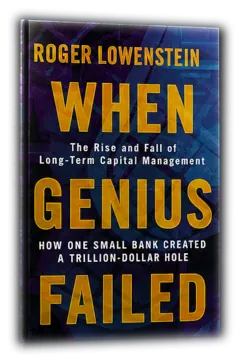
In fact, in the book When Genius Failed they detail the whole story — plus the five long days I spent on the phone with the Federal Reserve.
We likely saved the U.S. economy that day.
Now, I don’t say any of this to brag, but to make this point.
When a new technological or financial innovation takes hold, the extrapolation bias causes people to believe the gains from it will go on forever… the paradigm has shifted… that this time is different.
And it fools even the smartest in the room.
It’s what happened during the dotcom bubble, when investors made bigger and bigger bets that the internet boom would essentially create infinite wealth.
It’s what happened in the subprime market in 2008 when we created a “financial innovation” called CDOs that assumed housing prices would go up forever.
And it’s exactly what’s happening with AI today.
You see, the sky-high valuations of AI companies assume AI growth will be exponential.
They assume processing power will keep increasing…
That AI models will keep getting better…
That there is essentially infinite demand for AI products and that stock prices will go up forever.
As former Goldman Sachs banker and Bloomberg columnist Matt Levine put it, the business model they believe they need seems to be: “Create God and ask Him for money.”
How else can you justify five companies making up nearly 30% of the value of the S&P 500?
In other words…
Once again, everyone is assuming the future will look a lot like the past.
And some of the smartest people in AI are just beginning to figure that out.
For instance, Rob Arnott, an American investor and researcher who has authored over 150 academic publications, has said that this idea of infinite growth in AI is:
A classic example of a big market delusion… just like the dot-com era
Rob Arnott
And it looks like he is exactly right.
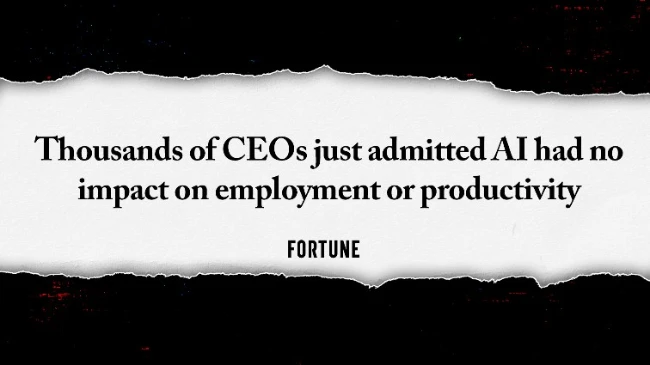
A survey from the National Bureau of Economic Research found that 90% of firms said AI has had no impact on employment or productivity.
Think about that…90% of firms are saying that AI has had no impact yet on their bottom lines.
Remember, this is coming at a time when OpenAI is risking bankruptcy within a year.
But it’s not just about money.
We are reaching the physical limits of AI too.
According to Tim Dettmers, a professor at Carnegie Mellon University and AI researcher, the wall of AI physical limits is coming soon.
As he put it:
“The same people who think that GPUs will infinitely improve are often the people who think superintelligence will make those improvements faster and better. But they do not realize that GPUs can no longer be meaningfully improved.
Rack-level optimization will likely hit the physical wall in 2026 or 2027.”
Tim Dettmers
That’s right…
He believes AI’s physical wall will be hit as soon as this year.
But it’s not just him.
Tech Entrepreneur and venture capitalist Marc Andreesen is warning that the wall is already here saying:
But this doesn’t just apply to microchips – it applies to energy too.
As George Noble, a former Peter Lynch protege who ran the No. 1 Fidelity Fund in the U.S., puts it:
Effectively saying that the power production needed for AI won’t scale.
As he went on to say:
And other scientists are beginning to say the same thing.
Yann LeCun, Meta’s longtime chief AI scientist and one of the most influential figures in LLMs (the modern version of AI), said they are a dead end:
LLMs basically are a dead end
Yann LeCun
Neural Scientist and AI Researcher Gary Marcus said it like this.
“The US AI policy now has largely been driven by hype, and the assumption that returns for LLM scaling would not diminish.
Well, LLMs have reached a point of diminishing returns… Scaling is running out, and that truth is, at last coming out.
When everyone realizes this, the financial bubble will burst quickly…when people realize the extent its valuation was built on a false premise.”
Gary Marcus
In fact, everywhere you look, you are starting to see the same thing…
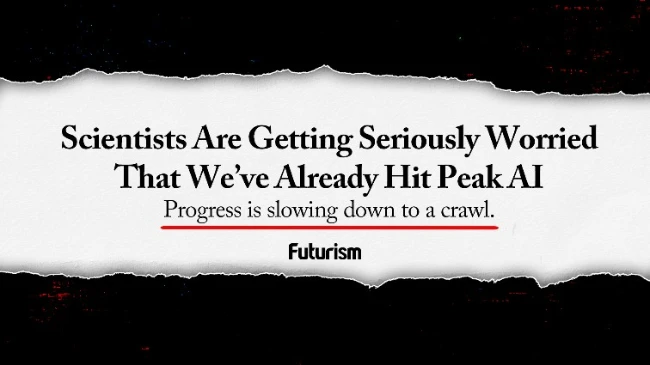
AI progress is beginning to slow.
The limits of this technology and the financial problems with AI companies are becoming impossible to hide.
The future will NOT look like the past.
And the market is beginning to catch on to that fact.
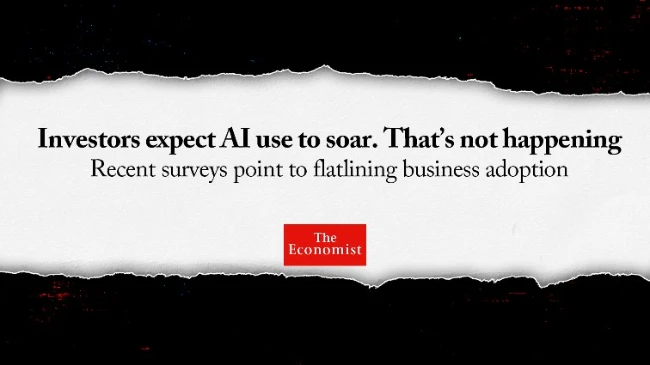
AI adoption is starting to flatline…
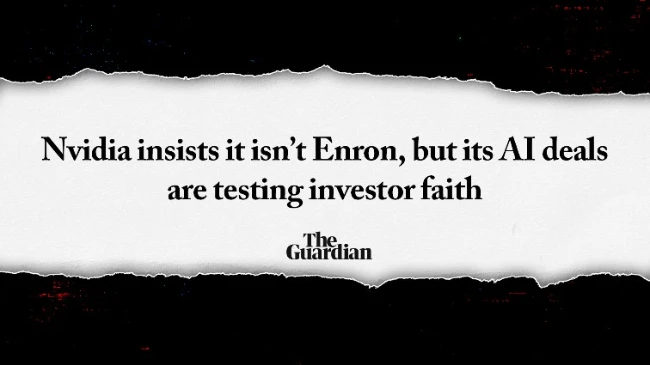
The circular deals propping up this bubble are testing the faith of high-level investors…
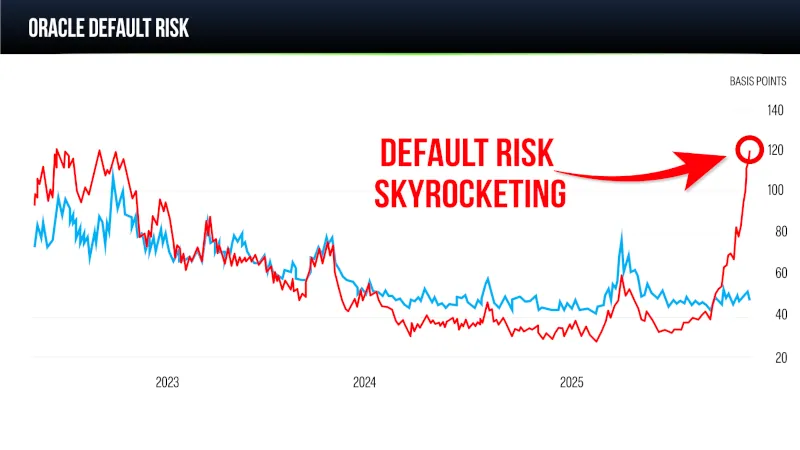
The credit risk for Oracle – the company building data centers – just had its default risk hit record highs.
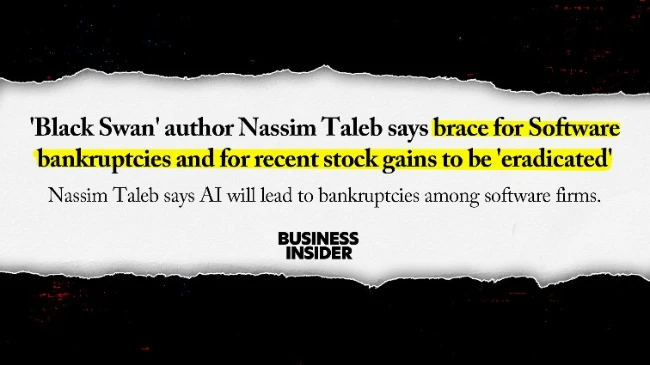
And investors like Nassim Taleb are warning people to get ready for a crash.
Which means the Minsky Moment could happen any day.
Look, once we are in the Ponzi Stage of a bubble…
All it takes is a single pin – a single Minsky Moment – to burst it and financially destroy millions of lives.
And the speed at which the collapse happens always catches everyone by surprise.
On March 20th of 2000 – during the height of the dotcom bubble – a single article was published by Barron’s about companies burning through cash.
Just seven days later…
Internet stocks plummeted 80% and didn’t recover for nearly 15 years.
On September 28th, 2007 – during the peak of the subprime housing bubble – NetBank collapsed.
Within a week, other banks began to fail too.
And suddenly we were being warned of the biggest financial crisis of our lives.
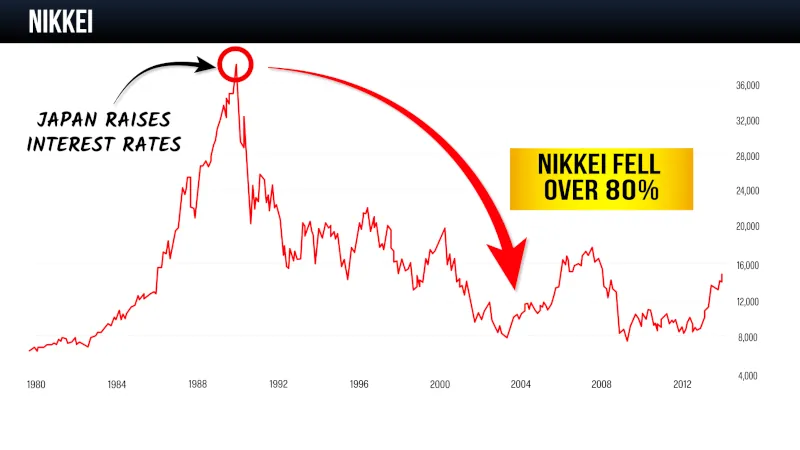
On Christmas Day 1989 – during the height of the Japanese technology and real estate boom – the Bank of Japan raised interest rates.
Within days, their entire stock market began to implode.
And it didn’t recover for nearly 35 years.
The point is…
The Minsky Moment always takes everyone by surprise.
One day the market is beginning to soar…
The next day, a single sobering report comes out and reality sets in.
And you are staring down the barrel of one of the biggest financial crises of your life.
It happened in 2000… It happened in 2008… And it’s happening right now.
Look, if there is anything I want to leave you with today, it’s this…
Unless you take the five steps I’m going to recommend to you today…
When the AI bubble bursts you’ll have no place to hide.
Just like the dotcom bubble or 2008, once this crisis hits…
We’ll see a massive sell-off in all assets.
And we could see the market crash 80% or more in the blink of an eye.
That’s why I want you to remember this date: August 26th.
You see, that’s the date AI companies like Nvidia, Meta and Coreweave release their earnings statements.
And a single earnings miss could be the pin that pricks the bubble for AI.
Remember, during the dotcom bubble, after Barron’s released an article called “Burning Up,” it began to dawn on people that internet companies were running out of cash…
When they began to miss earnings, the market plummeted almost 80%…
And it didn’t recover for 15 years.
I believe we will see something similar with the Minsky Moment for AI.
Once it dawns on people that these companies aren’t profitable…
That sales and earnings are starting to slow…
That the future will NOT look like the past…
The Minsky Moment will begin.
That means August 26th could be the day the AI bubble dies.
So what should you do to protect and possibly even grow your wealth as this plays out?
There’s a series of pretty simple financial moves I believe you should begin making immediately.
And this is important… You should make these moves now…
Before the Minsky Moment appears.
Once it hits, and the market begins its massive sell-off, it will be too late to profit from the collapse.
Fortunately, the moves I recommend are simple and fairly straightforward to implement – at least right now.
And even if you can only make one or two of these moves, not only will you be better prepared than 99% of Americans…
I believe you could come out far ahead while everyone else is losing their shirts.
And even if I’m wrong…well…that’s the best part – I think you’ll still make very good gains.
Even if the AI bubble collapse looks more like a correction than a crash – you’ll still be set up to do very, very well.
So here are the specific steps you should take…
Don’t get me wrong…
When the AI bubble bursts, the resulting shockwave will be felt throughout the entire stock market and the economy.
But the impact will not be equal.
There are certain stocks that will be most exposed to the fallout.
And if you have ANY of these stocks in your portfolio right now…
Well, my friend, you are sitting on a ticking time bomb – and it’s critical you get those stocks out of your portfolio immediately.
To put it bluntly:
These stocks will likely be – the BIGGEST losers of the entire AI collapse.
And just like Lucent, Nortel and Cisco, during the dotcom bubble…
Many of these stocks are widely held today.
And they are essentially going to be a black hole for your money.
Can you imagine holding Cisco during the internet bust, or Lehman Brothers during the 2008 financial collapse?
Many people did, and they got badly burned.
I believe these “AI Losers” will be today’s equivalent, which is why it’s crucial you remove them from your portfolio ASAP.
And if you have friends or family who happen to be invested in these toxic stocks, you should tell them to get out too.
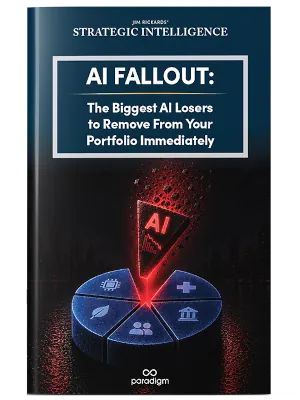
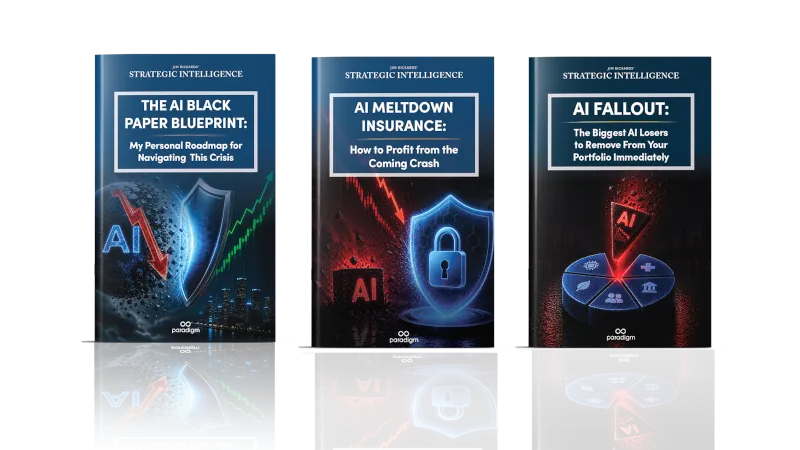
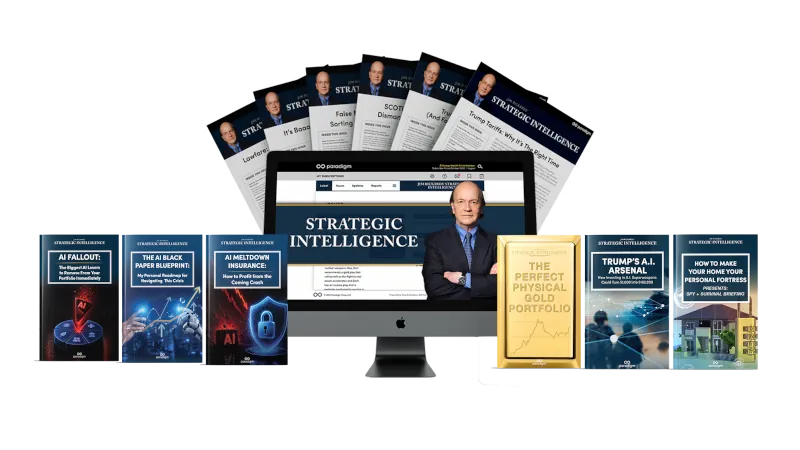
I’ve put all the details inside a report called “AI Fallout: The Biggest AI Losers to Remove From Your Portfolio Immediately.”
Now, contrary to what you may think…
These “AI Losers” are not the Big Tech stocks I’ve mentioned earlier – or even Oracle.
Sure, those stocks will invariably be heavily affected when the Minsky Moment hits.
But you already know about those stocks.
These are stocks no one expects.
And now that you also know how close the Minsky Moment is…
You can check your portfolio and retirement accounts to make sure you get them out.
You don’t want to be exposed to AI stocks, data center CDOs and especially the stocks I list in this report.
At the very least, I would recommend significantly trimming your positions to reduce your exposure as much as possible.
I detail how to check your portfolio and remove these toxic investments in the report.
And once you free up that extra cash, that’s where Step 2 comes in.
Look, now that you’ve taken defensive measures against a crash…
We want to go on the offense.
I’m talking about loading up on assets that could surge as the AI bubble collapses – as many as your risk tolerance will allow.
That’s what I’m doing.
In fact, I’ve just put a million dollars of my own personal money into these assets.
This isn’t just me talking – it’s where I’m actually putting my own hard-earned money right now…
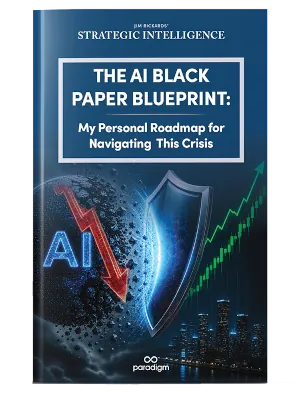
And you’ll be able to see my exact portfolio allocation inside the new report: “The AI Black Paper Blueprint: My Personal Roadmap for Navigating This Crisis.”
It’s an open book into exactly how I’m positioning myself to profit from AI’s Minsky Moment using specific assets.
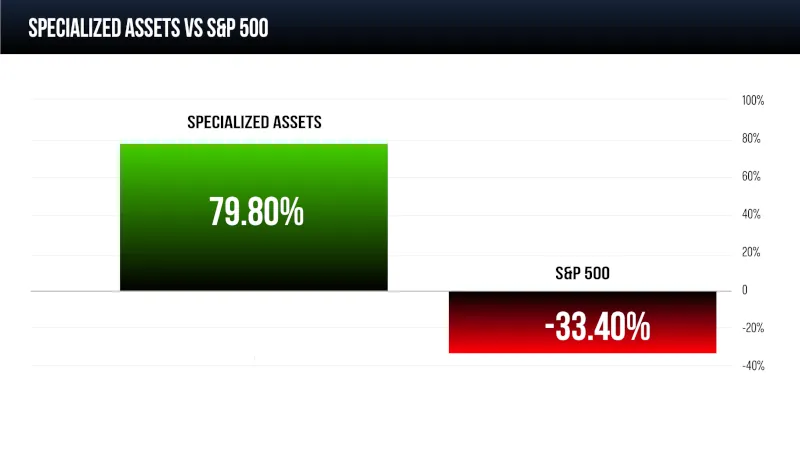
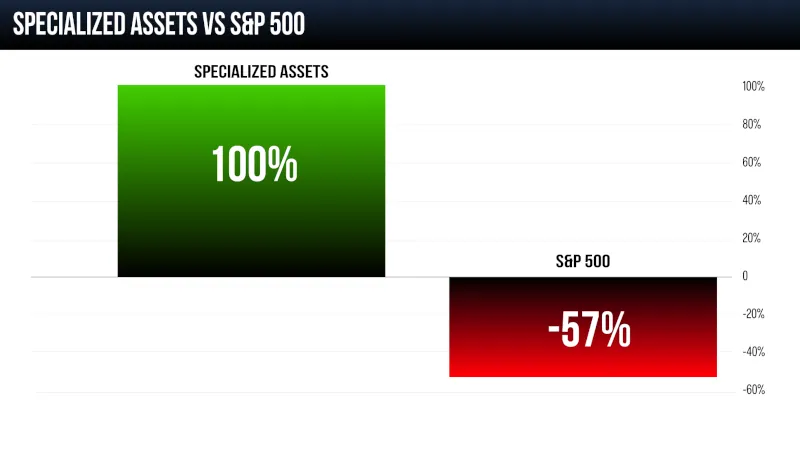
These assets performed very well in the aftermath of the Dotcom Crash and the Global Financial Crisis.
For instance, during the Dotcom Crash…
A basket of these assets rose nearly 80% – while the S&P 500 lost a third of its value over the same period.
During the Global Financial Crisis, this same basket rose 100% – while the S&P 500 collapsed by 57%.
I believe this time, these assets will do even better…
Which is why I’ve got a million dollars of my own money on the line.
Plus, here’s the best part about these assets.
Even if the AI bubble collapse isn’t as bad as I expect it to be, I believe these assets will still go up and deliver substantial gains.
And if the collapse turns out to be just as bad as I predicted? Even better.
Which brings us to Step 3.
During the Global Financial Crisis, while millions of people were helplessly wringing their hands as they watched their retirement accounts get wiped out…
Investors like Michael Burry, Jamie Mai and John Paulson were minting generational fortunes in a matter of just a few years.
Michael Burry pocketed $100 million personally – while making his investors $700 million.
Jamie Mai turned $110,000 into $80 million.
And John Paulson took home $4 billion personally from the trade, while his fund made a cool $15 billion total.
They all saw the crash coming…
And they all placed a very specific type of trade that allowed them to become stupendously wealthy while the stock market cratered.
I’m going to show you how to do the same.
In fact, even though your risk is limited to only what you invest, because this is a special type of leveraged trade, it will pay out more the worse the collapse is.
Which means the potential upside is enormous.
In fact, according to my calculations, this trade could return 600% within the next 12 months – and we don’t even need to see a dotcom-level crash for that to happen.
Even a relatively modest correction would do.
But if we do see a dotcom-level collapse…
You could be looking at gains of well over 600%.
Imagine making six, seven or maybe even 10 times your money as others lose their shirts.
I must warn you, you might feel a little guilty when that happens.
But that’s just the price of being prepared.
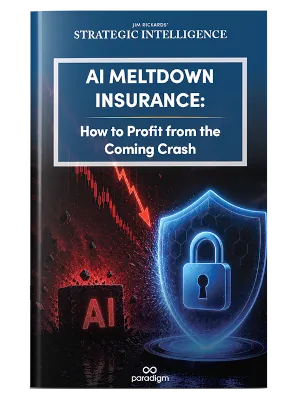
I’ve put all the details of this trade inside the report: “AI Meltdown Insurance: How to Profit from the Coming Crash.”
So, to recap – that’s three special reports I have lined up for you today.
The first is “AI Fallout: The Biggest AI Losers to Remove From Your Portfolio Immediately.”
The second is “The AI Black Paper Blueprint: My Personal Million-Dollar Roadmap for Navigating and Profiting From This Crisis”…
Where I detail the specific assets I’m allocating a million dollars of my own money to in order to profit from the coming Minsky Moment.
Finally, you have “AI Meltdown Insurance: How to Profit From The Coming Crash”…
Where I share with you a little-known trade that could hand you a 600% return in a year– and possibly even more – as the collapse unfolds.
My team has raced to assemble these reports for a good reason.
AI’s Minsky Moment is upon us – and people are going to be caught off guard.
But not you.
Thanks to the exclusive information contained in these reports, you’ll be informed, protected and positioned to profit.
And all you have to do to claim these special reports…
Is to say YES to joining a small, private circle of informed citizens inside my exclusive newsletter called Strategic Intelligence.
This newsletter is where I warn readers of the coming threats to our economy and our freedoms…
And show you how to protect and profit from these crises.
I predicted the 2008 financial crisis…
Brexit in 2016…
The victory of Donald Trump in both 2016 and 2024…
And the Ukraine war.
And today, when you make the decision to join us inside Strategic Intelligence…
You’ll get everything you need to not only protect yourself from the coming AI collapse – but use it to your advantage.
And that’s just the start.
Because every month after, you’ll get a new issue filled with ideas and strategies to help you grow and protect your wealth.
And if you’re wondering how I’ve managed to predict all these events…
It all has to do with something called Complexity Theory…
Which is my revolutionary way of looking at the financial system and stock markets.
I estimate less than 10 people in the world know how to properly apply it.
Complexity Theory is unlike anything else out there…
And it’s what gives me unique insight on exactly how American and global events could play out…
What stocks might crash…
And what assets could shoot up in value at the same time.
You won’t get any sugarcoated nonsense inside this newsletter – just the uncensored, unvarnished truth…
As well as actionable market intelligence that could set you up to profit from everything going on in the world right now.
Before Strategic Intelligence, I only provided this kind of research to my high net-worth clients and members of the U.S. Intelligence community.
But once I saw how poorly informed and easily manipulated the average investor was…
How far behind the curve they usually were…
I knew I had to expand who I shared my research with.
Today, the Strategic Intelligence community has grown to tens of thousands of satisfied members.
Every single one of these members is equipped with the information they need to survive and thrive, no matter what’s going on in the markets.
And today, you have the chance to be one of them.
Now, I’ll be candid.
Joining the Strategic Intelligence community isn’t free.
In fact, it simply cannot be free.
The quality of the research I provide…
The sources I have to tap into to get true “behind-the-scenes” information…
It all takes a substantial amount of resources.
That said, I think you’ll find the offer I have for you today to be very fair and generous.
Normally, joining the Strategic Intelligence community would cost you $299 for 6 months.
Even at that price, it’s a steal.
Because what is it really worth to protect your portfolio and even profit during times of crisis?
To have true peace of mind while others are losing their heads – knowing that you’re already positioned to come out on top…
To avoid the crash and potentially take home a 600% return or more over the next year as this crisis plays out?
Is that worth six figures? Maybe more?
So I think you’ll agree that $299 for 6 months is still an extremely fair deal.
But because of how urgent the situation is, with AI’s Minsky Moment potentially only a few weeks away…
I’m going to go even further and cut the price even more.
I don’t want any hard-working American to suffer because of the reckless actions of the Big Tech companies.
That’s why if you say YES to my offer today…
You won’t even have to pay $299 for 6 months of access to Strategic Intelligence.
Instead, you’ll pay a flat price of $49 – for 6 months of Strategic Intelligence.
That’s a discount of 83%…
And it comes out to about 8 bucks per month – basically the price of a sandwich…
Or under 28 cents per day.
And I’m not asking you to buy – I’m just asking you to try.
You see, I’m so confident in the quality of the research inside Strategic Intelligence…
That I’m willing to take on ALL the risk with an unconditional 100% money-back guarantee.

Once you sign up, you’ll have three full months to decide if this research is right for you.
If you don’t like what I have to offer – for any reason whatsoever – just call my customer service team and we’ll refund you the full cost of your Strategic Intelligence subscription.
And on top of that, you can still keep all the special reports I have for you today, even if you refund.
You can keep them all.
Now, there’s a button below.
It says “Join Now” – and it’s a secure link that’ll take you to an encrypted order form.
You’ll get a full summary of everything on offer today, and anything else you’ll receive as part of your trial subscription.
JOIN NOWAnd what’s more…
To prove to you that the quality of the research inside Strategic Intelligence is like nothing else out there…
I’m also going to give you a few more gifts today.
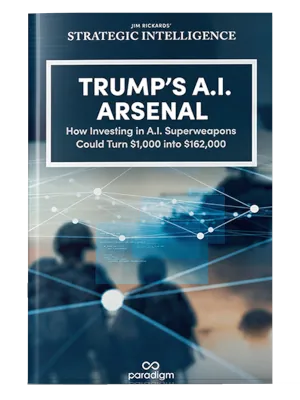
The first gift I have for you is a bonus report called “Trump’s AI Arsenal: How Investing in A.I. Superweapons Could Turn $1,000 into $162,000.”
Like I’ve said before – I believe AI is an important, transformational technology, just like the Internet was.
But just like the Internet, there has been simply too much hype built around it – creating a dangerous bubble that is about to pop.
Most of these hype-driven companies – and their investors – could suffer huge losses.
But if there’s one sector of the market that I’m bullish on right now, it’s got to be defense.
The defense sector has not only historically done an outstanding job of delivering value to shareholders…
It’s also a sector that could capture the most value from AI – without any of that AGI hype needed.
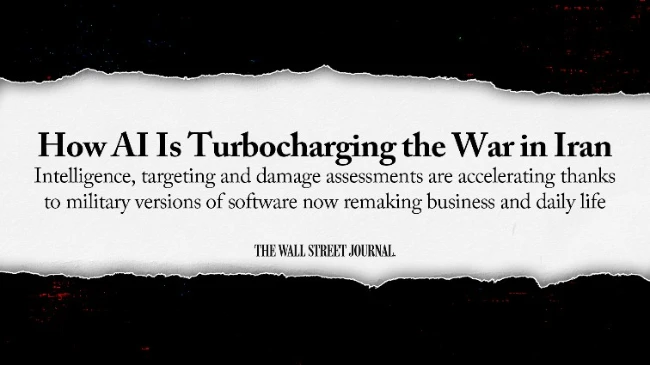
We’ve already seen it being used in the latest Iranian conflict…
And this is just the beginning.
The Department of War… the Pentagon – they’re all integrating AI into their operations.
The money is flowing.
So if you want to get yourself into a sector that could actually deliver real, sustained value to shareholders thanks to AI – without all the hype…
This report will show you a few investments that could skyrocket over next decade in battlefield AI.
You’ll find all the details of my top-choice highest-potential defense stocks inside this report.
There’s a stock in there that’s partnered with Elon Musk’s SpaceX to develop something called Star Shield…
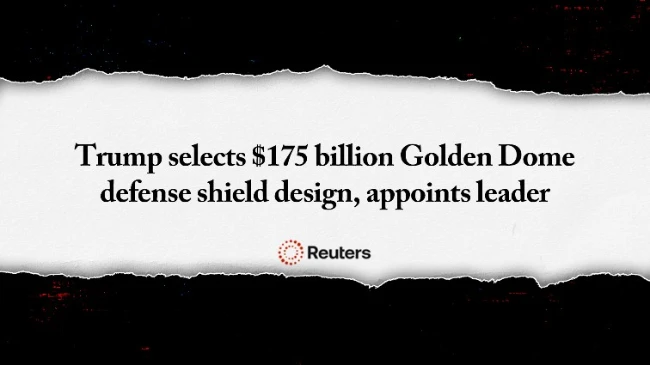
An early warning system for America that’s part of Trump’s Golden Dome defense system.
Another stock has an AI-powered long-range drone that can take out targets up to 3,000 miles away.
It’s the future of warfare.
My second gift to you is called “The Perfect Physical Gold Portfolio”…
And it’s my blueprint for showing you exactly how much physical gold you should be holding.
You already know why you should be holding the world’s greatest store of value.
Rampant money-printing… geopolitical uncertainty… the loss of faith in the U.S. dollar worldwide.
But did you know how much physical gold you should be holding?
Not gold shares – but physical gold…
The kind that will actually be useful in the event that things get really, really bad.
This report will give you the exact answer.
Inside, I break down my recommended split of bullions, gold eagles and monster boxes you should own, depending on the size of your portfolio.
And speaking of things getting really bad…
My third gift for you today has absolutely nothing to do with any kind of financial assets whatsoever.
But it could help you protect the most important asset of all – your life and your family’s lives.
It’s called “How to Make Your Home Your Personal Fortress.”
It was written by former CIA operative Jason Hanson, who’s won the CIA Exceptional Performance Award not once, but TWICE.
After leaving the agency, Jason became the world’s foremost expert in teaching men and women how to be safe using spy secrets most Americans will never know.
This report will teach you how to protect your home day or night…
How to equip your very own “defense HQ” inside your home for just a few hundred bucks…
As well as what to do if you’re confronted with the nightmare scenario – armed intruders in your home.
Just glance at the news headlines and you can see why you need this right now.
Riots… looting… deadly break-ins…
They’ve become sadly all too common nowadays.
And if the bursting of the AI bubble pulls many communities into an economic depression, like I expect?
Things could get even uglier.
It’s your duty not to let yourself – or your family – become victims in your own castle.
Implement Jason’s home protection blueprint before it’s too late.
Again, all these reports are yours the second you accept my invitation to join Strategic Intelligence today.
To recap, you’ll get:
Within minutes, all six of these reports could be waiting in your inbox.
And by the end of today, you could be positioned to protect and profit from the coming AI Minsky Moment.
Your investment today is only $49 – an 83% discount.
And remember, I’m taking on all the risk here.
You don’t need to buy – you just need to try.
Of course, I’m 100% confident that once you see what Strategic Intelligence has to offer, you’ll want to stay a member for life.
But anytime during the first three months, you can ask for a full no-questions-asked refund…
And you’ll still be able to keep all your Strategic Intelligence dossiers alongside all six reports above.
AI’s Minsky Moment is upon us.
You’ve seen the evidence. You know what you need to do.
But knowledge is useless without action.
So the way I see it, you have a few options.
The first is to do nothing…
To accept being a victim…
To bury your head in the sand…
And believe that this AI bubble could go on forever – which is what the Big Tech companies want you to believe.
But if you’ve made it this far, then I know this road isn’t for you.
The second option is for you to try to do everything yourself.
Sell all your AI-related stocks – or maybe sell all your stocks altogether.
Sure that may help you avoid the worst of the coming Minsky Moment.
But it won’t help you actually profit from the crisis.
Remember, I’m allocating a million dollars of my own money into specialized assets that have traditionally returned triple-digits while the stock market collapsed.
And the details on exactly how you could do the same are waiting for you inside.
But not if you choose the hard road – the road of trying to do everything yourself.
And that brings us to the third option.
The easy road…
The smart choice…
The choice of the informed citizen.
And that is to leverage all the resources we’ve already expanded to bring you this research…
And join us inside Strategic Intelligence.
So go ahead and press that “Join Now” button right now…
JOIN NOWAnd tell me exactly where to send your 6 free reports.
The risk is all on us, thanks to the unconditional money-back guarantee…
But the upside is all for you.
So make the intelligent choice…
Press the button below – and I’ll see you on the other side.
Thank you for watching this presentation.
April 2026
JOIN NOW